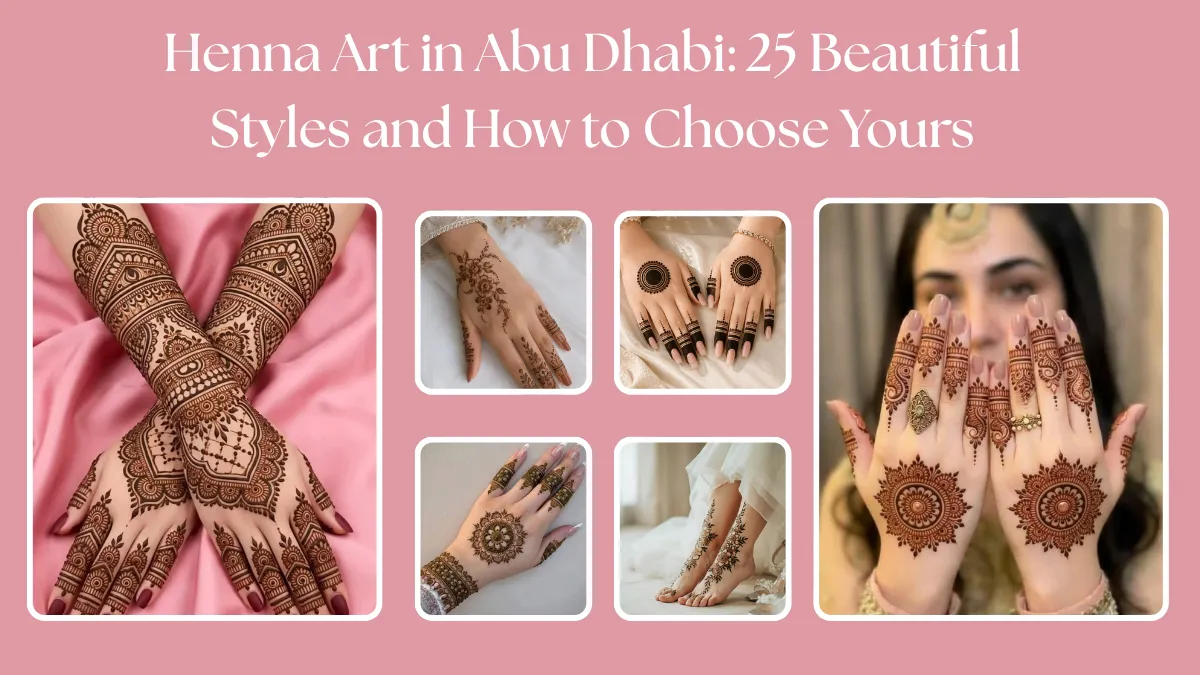
Henna art can be bold and bridal, light and minimal, playful for children, or deeply connected to family and cultural traditions. A flowing Arabic vine may be perfect for an Eid gathering, while an intricate Marwari pattern may feel more appropriate for a wedding. Some women prefer detailed hands and feet; others want one graceful flower, bracelet, or fingertip design.
That is what makes henna so personal. The most beautiful design is not always the largest or most detailed one. It is the pattern that suits your occasion, outfit, placement, available time, and personal style.
At Aphrodite Beauty & Spa, professional henna services include traditional Arabic, floral, bridal, and modern creative patterns. Designs can be customized for full hands, feet, arms, or smaller areas according to the client’s event and preferences.
This guide explores different types of henna art, from Khaleeji and Indian mehndi to minimalist Arabic designs, jewelry patterns, botanical trails, kids’ henna, and personalized calligraphy.
What Is Henna Art?
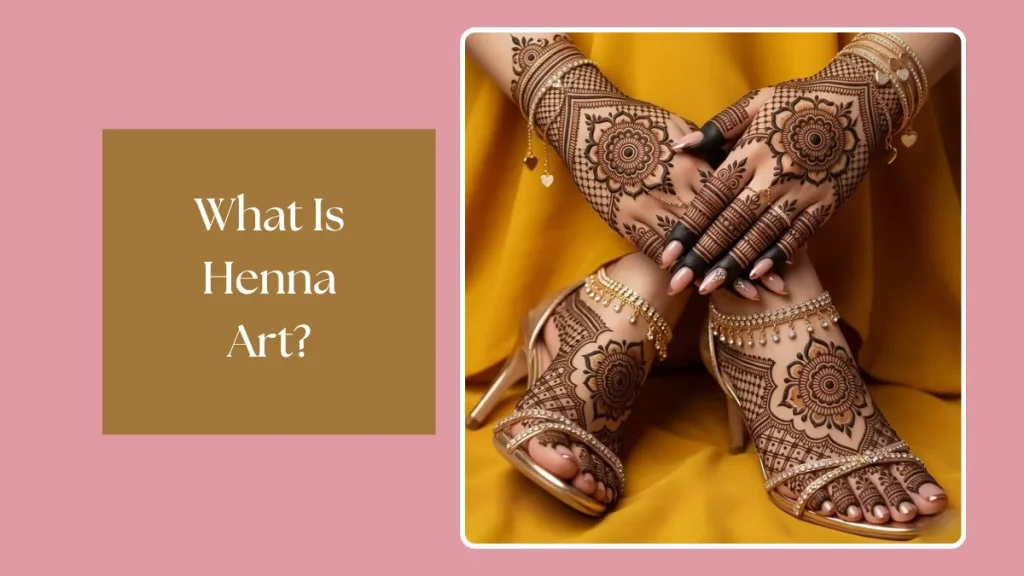
Henna art is a temporary form of skin decoration created by applying henna paste in carefully planned patterns. Once the paste dries and is removed, it leaves a coloured stain that gradually deepens before fading naturally over time.
The design may include:
- flowers and leaves;
- paisleys;
- geometric shapes;
- mandalas;
- bracelets and jewelry patterns;
- peacocks;
- fine-line trails;
- mesh or jaali details;
- names, initials, or meaningful scripts.
Henna is closely associated with weddings, Eid, engagements, henna nights, family celebrations, and cultural events. Modern henna artists have also expanded it into everyday beauty, minimalist hand art, fashion styling, and customized event designs.
Aphrodite’s service information states that it uses 100% natural henna and that a professionally applied design typically lasts around 7 to 14 days, depending on skin type, aftercare, and exposure to water or soap.
Why Henna Art Remains So Meaningful in Abu Dhabi
Abu Dhabi brings together Gulf, Emirati, Arab, Indian, Pakistani, Moroccan, and wider international beauty traditions. Henna naturally reflects this cultural variety.
Some women prefer bold Khaleeji flowers with generous negative space. Others choose dense Indian mehndi for bridal events, Pakistani floral vines for Eid, or Moroccan geometry for a more structured and contemporary look.
Henna also creates a moment of calm before an occasion. Sitting for the application, selecting a design, and allowing the stain to develop can become part of the celebration itself.
Professional henna art matters because the artist must balance:
- pattern flow;
- line thickness;
- symmetry;
- spacing;
- hand shape;
- design placement;
- application speed;
- drying time;
- outfit and jewelry coordination.
A design that looks beautiful in a photograph may need to be adjusted to suit your hand, fingers, wrist, arm, or feet.
How to Choose the Right Henna Design
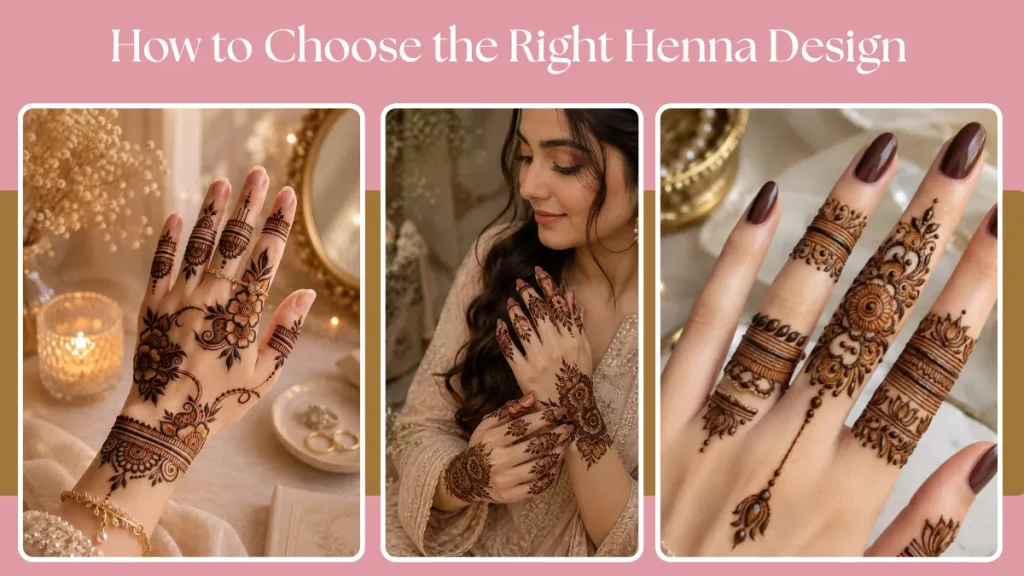
Before selecting a design, think about how you want the finished henna to feel.
Begin With the Occasion
A simple floral trail may suit an informal gathering, while a wedding or henna night may call for denser hands, matching feet, and longer arm coverage.
Decide How Much Coverage You Want
Coverage can range from one finger or a small wrist bracelet to both hands, forearms, elbows, feet, and ankles.
More coverage usually means:
- more detail;
- longer application time;
- greater visual impact;
- more planning around clothing and movement.
Think About Your Outfit and Jewelry
Open floral designs work beautifully with heavily embellished outfits because they do not compete visually. Detailed mehndi can complement simpler bridal clothing or traditional jewelry.
Bracelet and hathphool patterns are especially useful when you want the henna itself to resemble hand jewelry.
Choose Between Light and Detailed Art
Minimal henna uses fine lines, small motifs, and open skin. Traditional bridal mehndi may include closely connected flowers, paisleys, mesh, peacocks, arches, and personalized symbols.
Neither is more beautiful by default. They create different moods.
Consider Your Available Time
A small mandala, wrist trail, or kids’ design may be completed quickly. Full bridal hands and feet require more time and patience.
25 Henna Art Styles and Where Each One Works Best
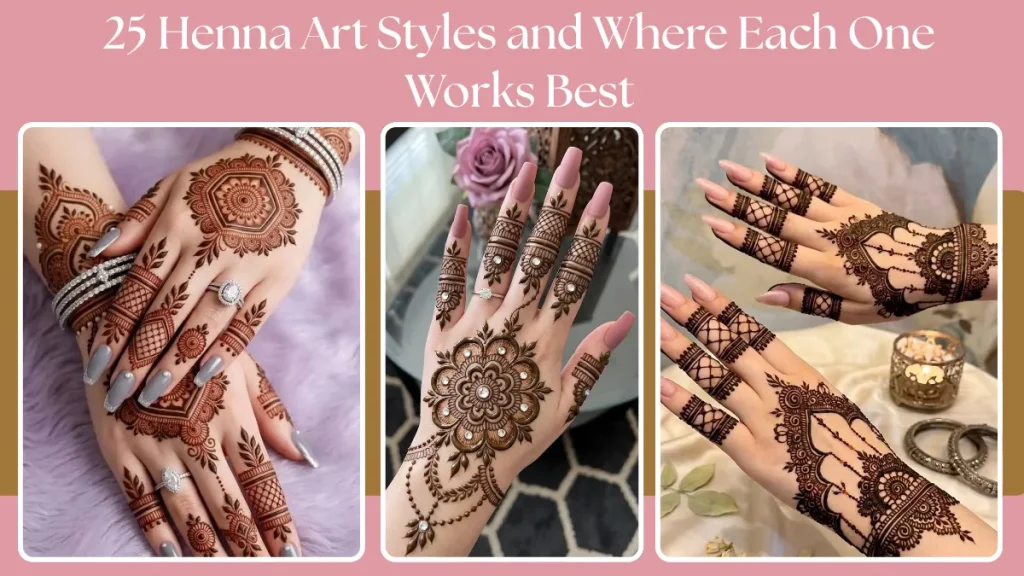
The following styles include cultural traditions, modern compositions, placement ideas, and motif-based designs. Some describe an overall artistic family, while others describe how the pattern flows across the hand.
Traditional and Cultural Henna Styles
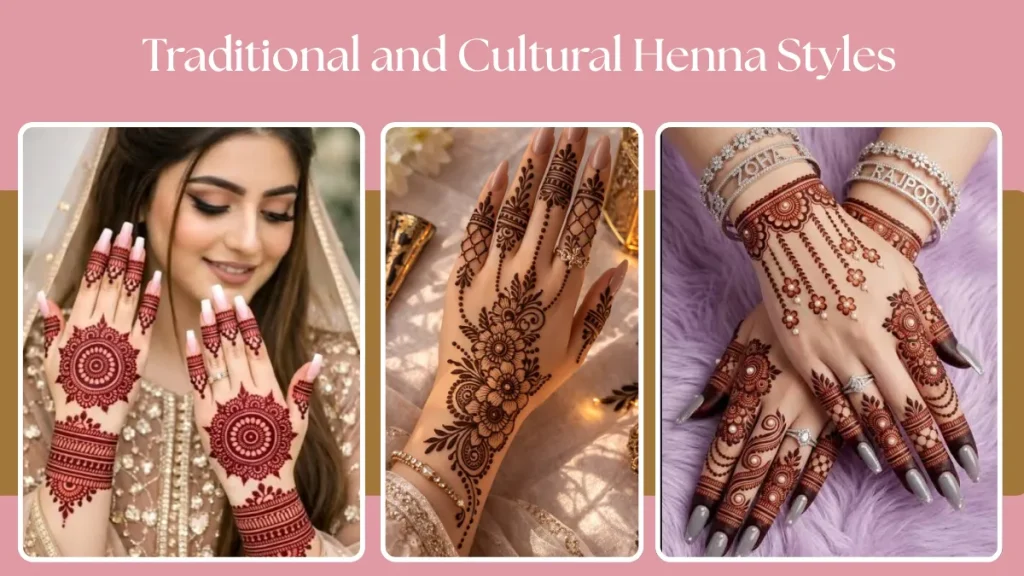
1. Traditional Arabic Henna — Khaleeji Style
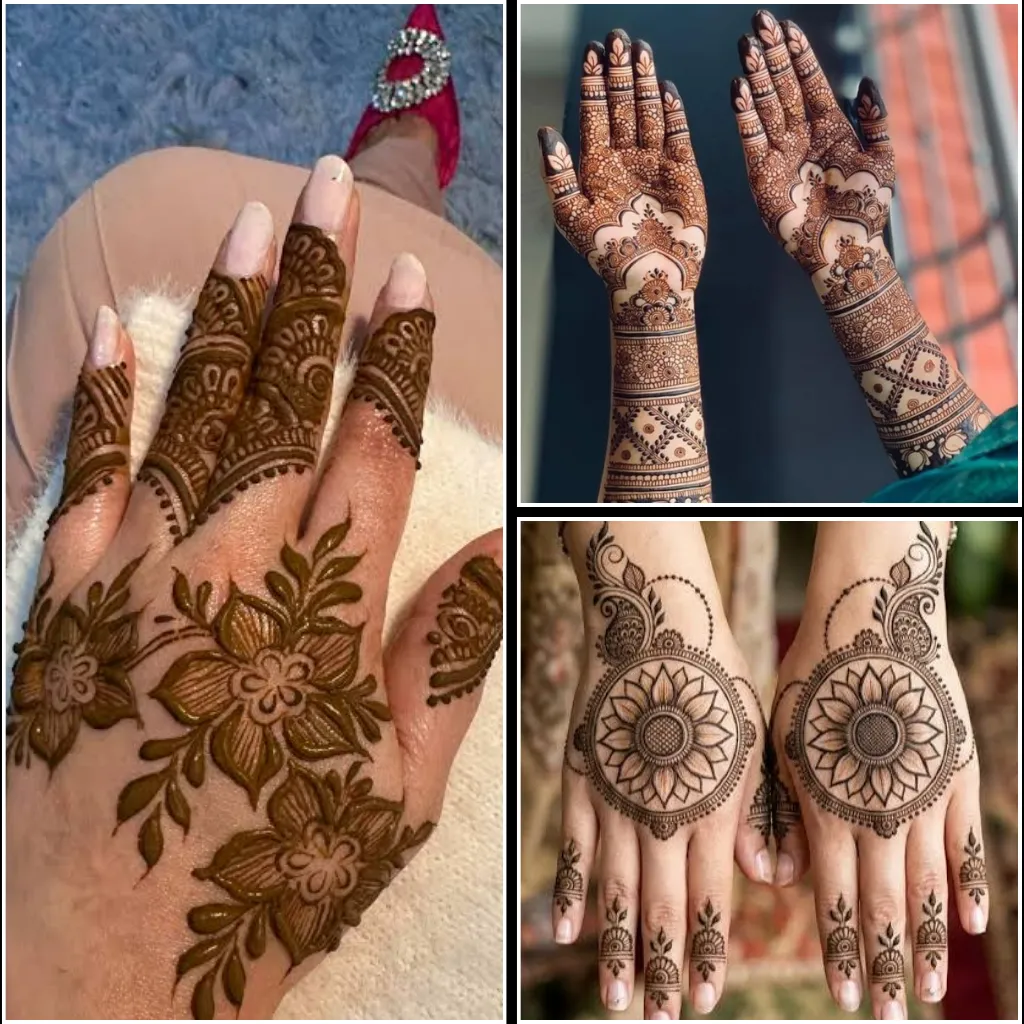
Traditional Arabic or Khaleeji henna is known for bold floral forms, sweeping leaves, curved stems, and clearly visible open spaces. Rather than covering every part of the hand, it allows the skin to become part of the composition.
It can suit:
- Eid celebrations;
- weddings and engagements;
- formal Gulf events;
- women who prefer strong floral beauty;
- hand and forearm designs.
Compared with dense Indian mehndi, Khaleeji henna usually feels more open and flowing. The pattern may begin at one side of the wrist, travel diagonally across the hand, and finish with detailed finger work.
2. Khafif — Modern Arabic Minimalist
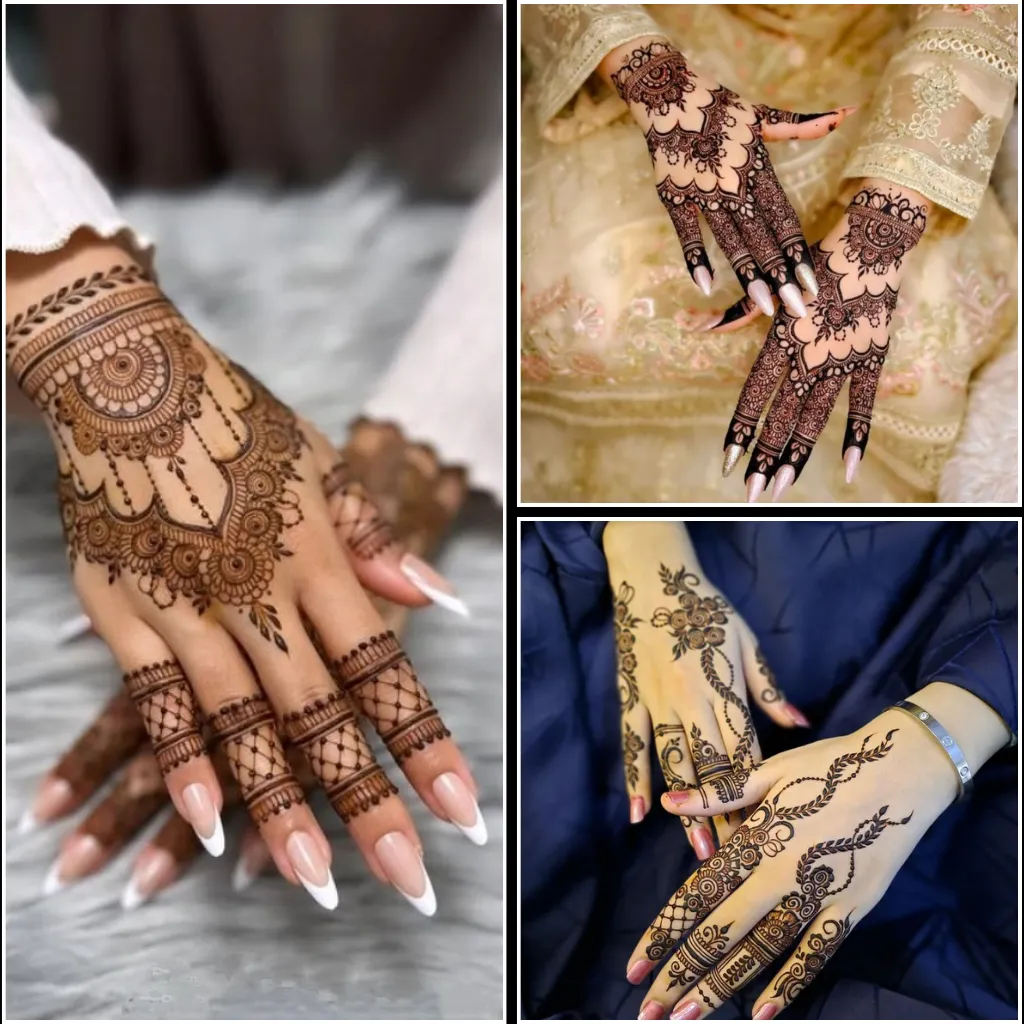
Khafif henna takes a lighter approach. The design may feature one fine floral trail, small leaves, delicate fingertip details, or a narrow wrist pattern with generous negative space.
This style is ideal when you want:
- easy henna designs;
- a work-friendly look;
- a quick event appointment;
- understated Eid henna;
- a modern design for teenagers;
- henna that does not cover the whole hand.
Khafif is especially effective when the line work is clean. Because the pattern is light, every flower, curve, and dot becomes more visible.
3. Traditional Indian Henna — Marwari Style
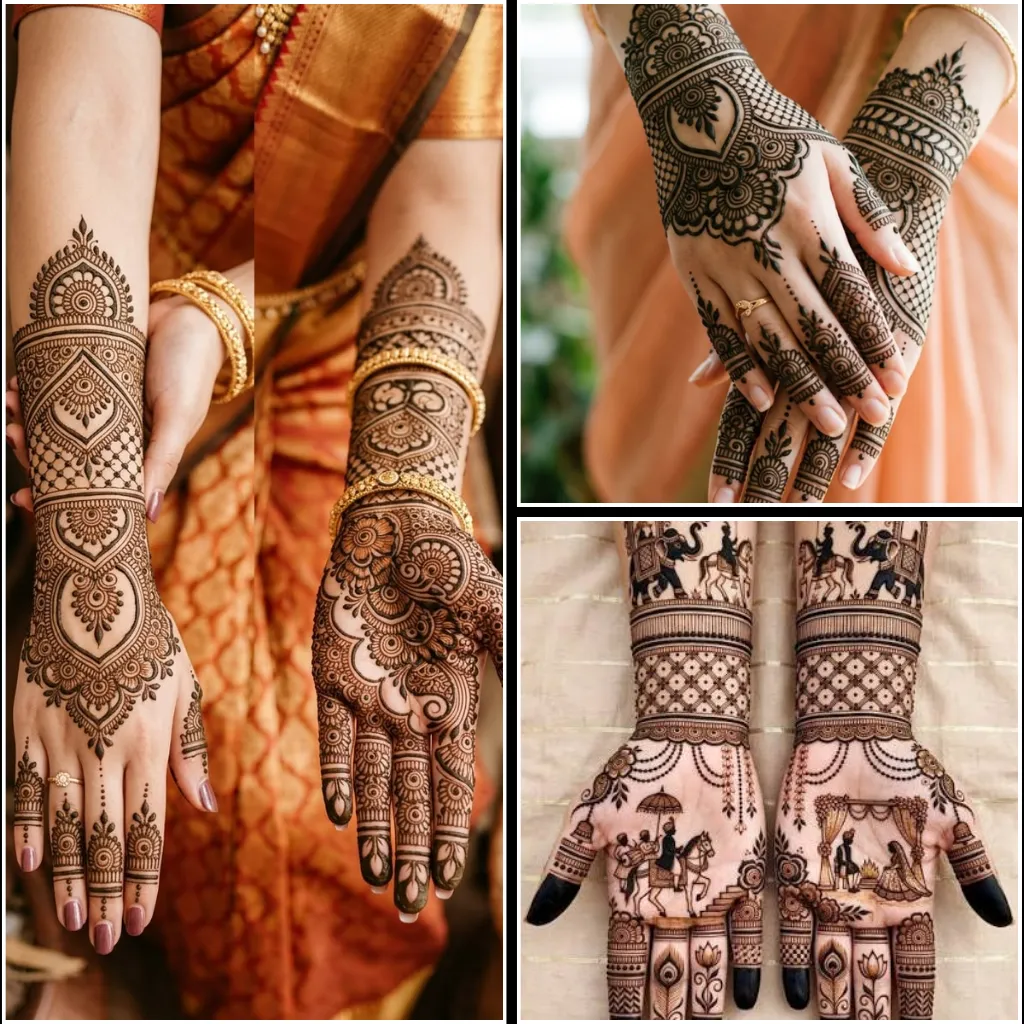
Marwari mehndi is detailed, symmetrical, and richly filled. It may include fine paisleys, flowers, peacocks, jaali work, architectural elements, and continuous patterns extending across the hands and arms.
It is most suitable for:
- brides;
- traditional wedding ceremonies;
- full-hand mehndi;
- women who enjoy intricate detail;
- coordinated hands and feet.
Compared with Arabic henna, Indian designs generally use less empty space and more small connecting elements.
4. Indo-Arabic Fusion
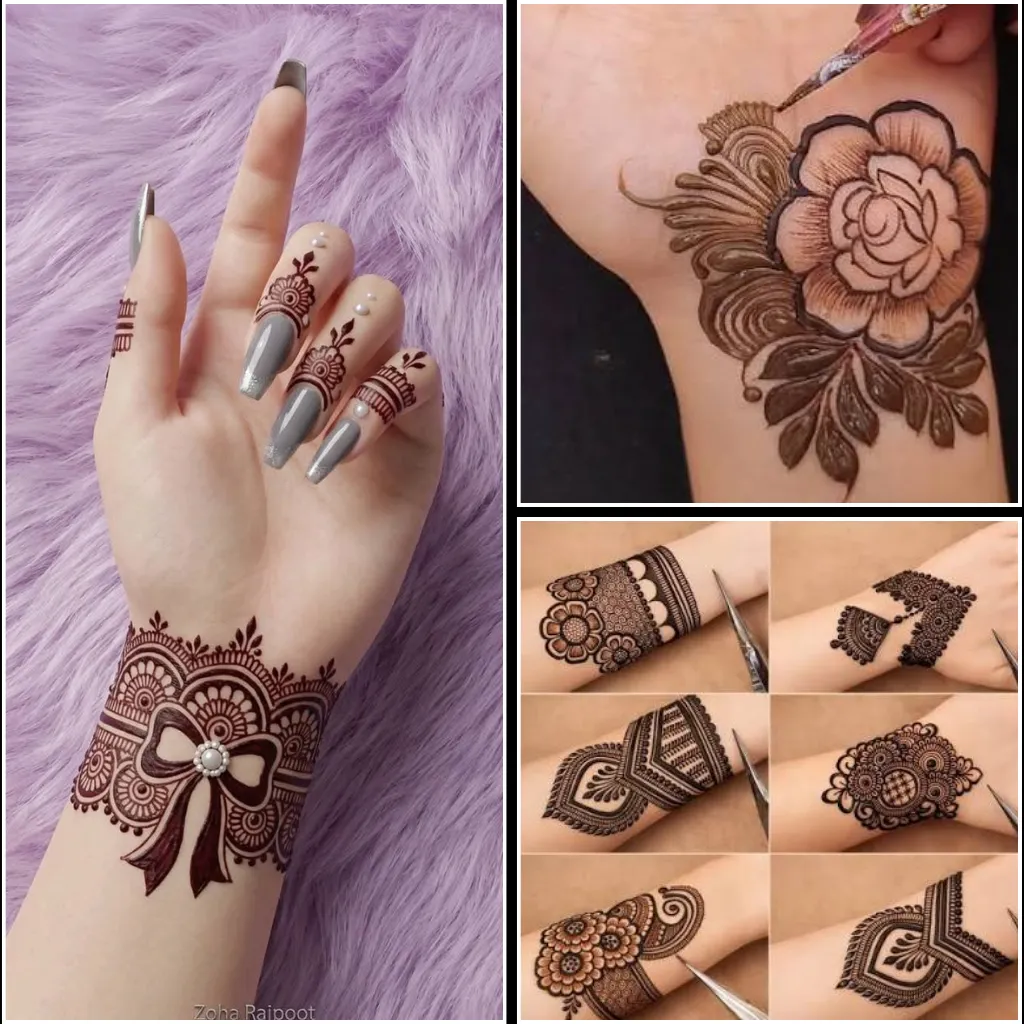
Indo-Arabic henna combines the fine detail of Indian mehndi with the flowing flowers and open spaces of Arabic art.
A large rose or paisley may act as the focal point, while smaller lines, jaali, leaves, and finger details add richness around it.
This fusion works well for:
- brides who want detail without completely filled hands;
- wedding guests;
- engagement celebrations;
- Eid events;
- women deciding between Indian and Arabic styles.
5. Moroccan or Geometric Henna
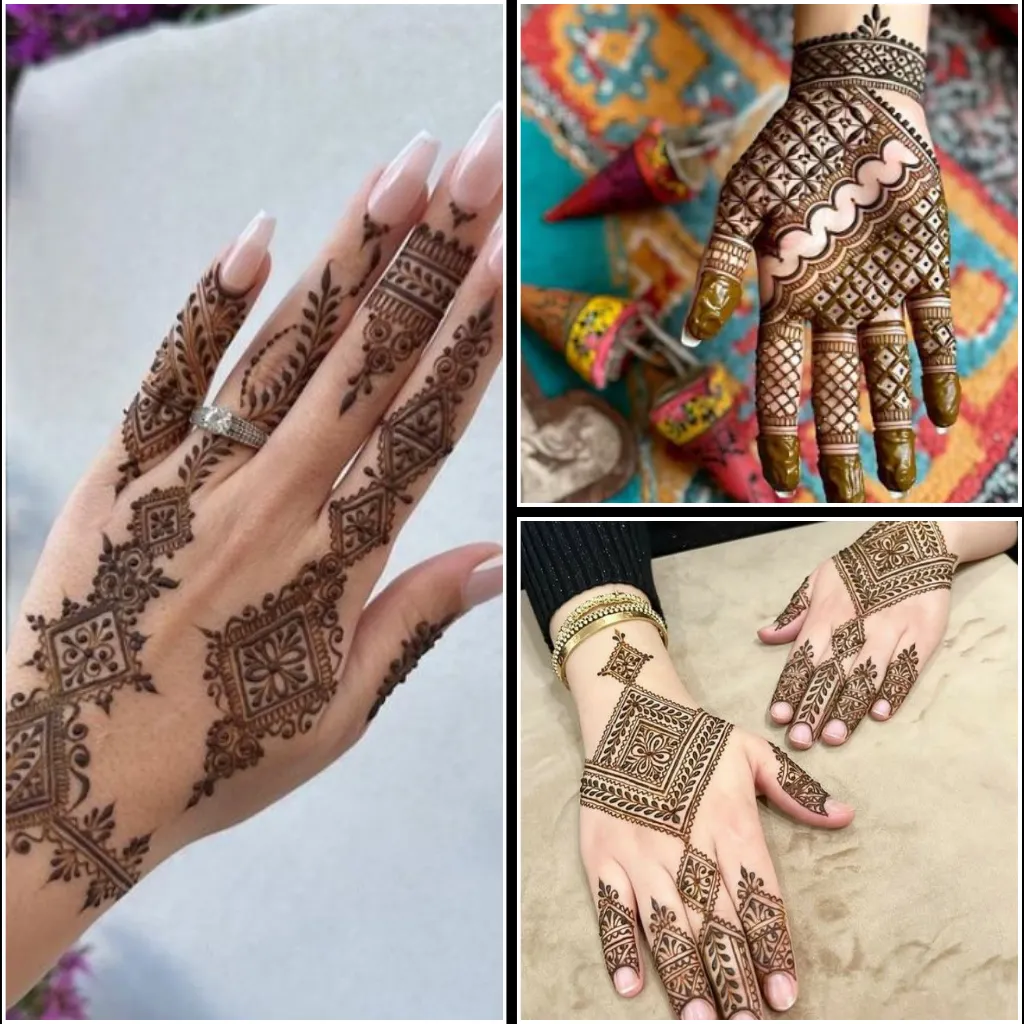
Moroccan henna uses structured diamonds, lines, triangles, crosses, grids, and architectural shapes. It creates a graphic appearance that feels very different from soft floral henna.
The style may be kept traditional and bold or softened with leaves and ornamental borders.
It suits:
- women who prefer geometry over flowers;
- contemporary styling;
- wrist and finger patterns;
- symmetrical hand designs;
- Moroccan-inspired celebrations.
6. Pakistani Floral — The Floating Vine
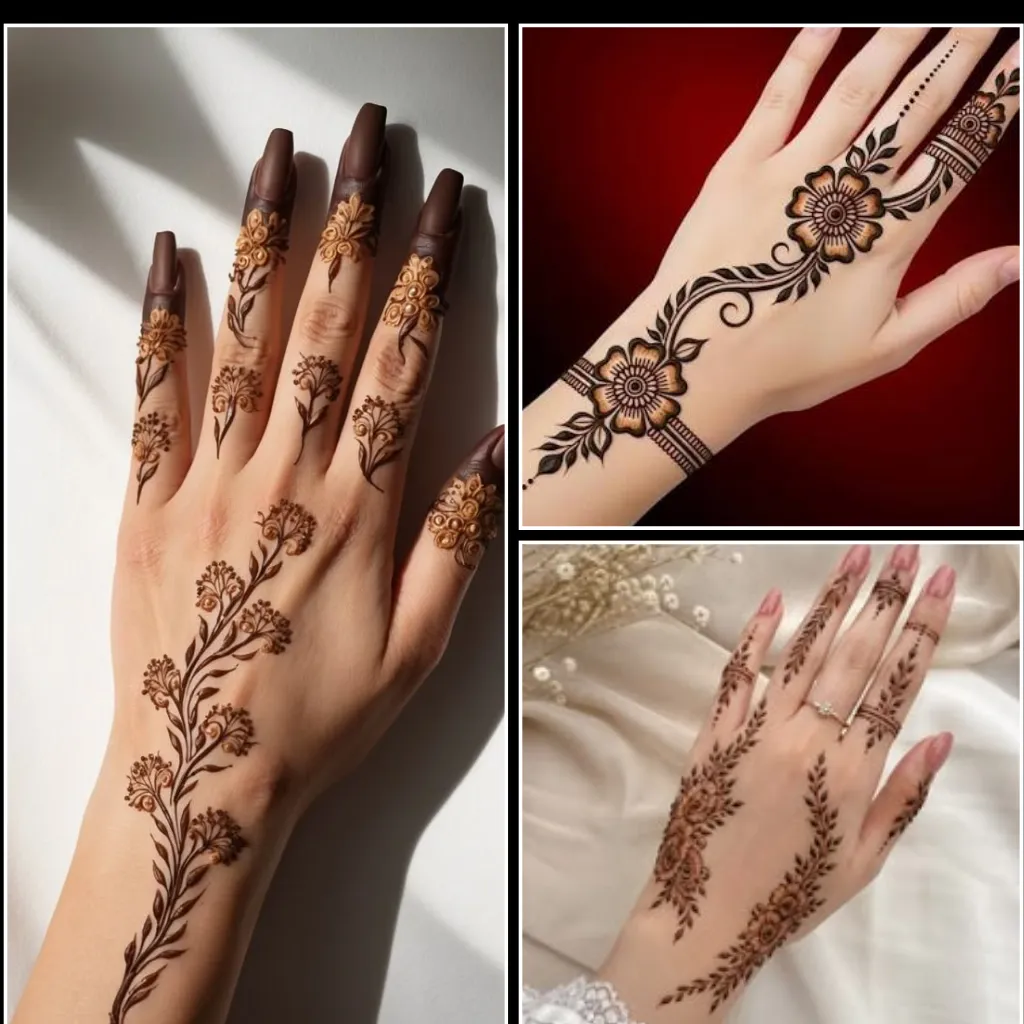
The Floating Vine uses flowers, buds, leaves, and delicate curves that seem to travel freely across the hand. The design often begins at the wrist or lower palm and moves toward one or two fingers.
It feels feminine without becoming overly dense.
This style works beautifully for:
- Eid;
- engagements;
- wedding guests;
- family gatherings;
- women who like floral mehndi with open space.
Jewelry and Central Henna Designs
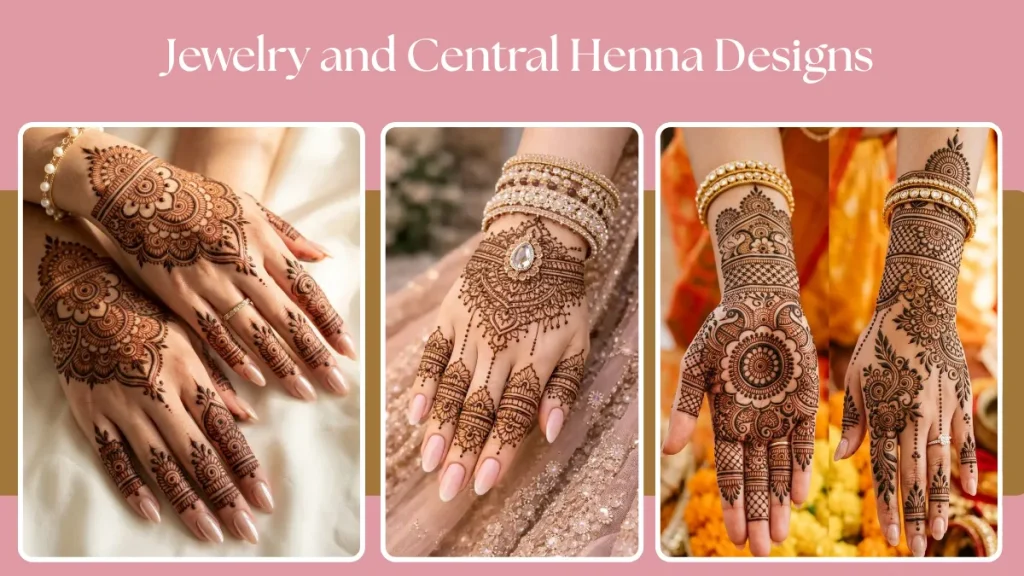
7. Jewelry Style — Hathphool or Bracelet
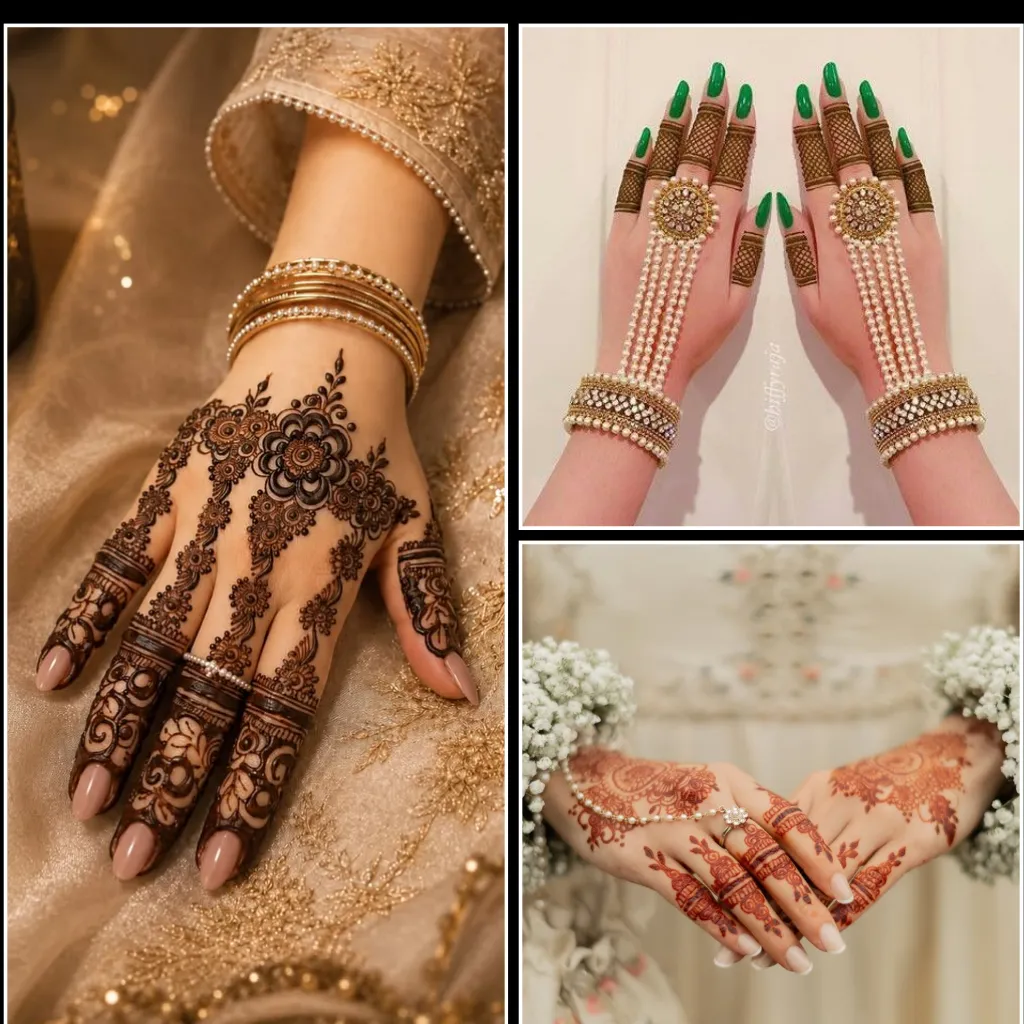
Jewelry-style henna imitates the structure of bracelets, rings, finger chains, and traditional hathphool hand ornaments.
A central floral or mandala element may be connected to the fingers by fine dotted chains, while a decorative band circles the wrist.
It is a beautiful choice when:
- you want henna that looks like jewelry;
- you are wearing a sleeveless or short-sleeved outfit;
- you prefer structured placement;
- you want a design suitable for engagement photos;
- you do not want full-palm coverage.
8. Gulf Royal Bridal
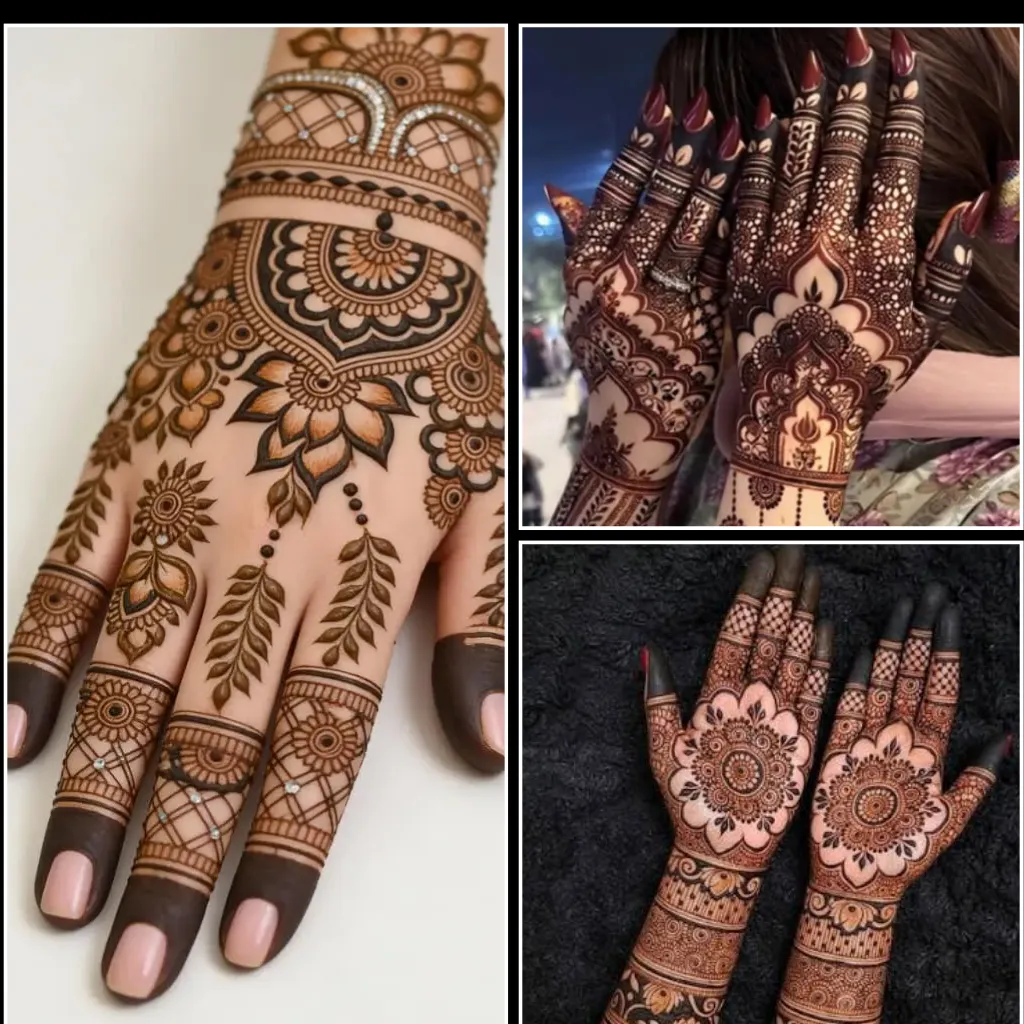
Gulf Royal Bridal henna is designed to feel polished, regal, and celebration-ready. It may combine strong Khaleeji flowers, matching hands, detailed fingers, forearm coverage, and coordinated foot art.
The beauty of royal bridal henna comes from balance. It should feel rich without appearing crowded.
A custom bridal layout may be planned around:
- sleeve length;
- wedding jewelry;
- gown or traditional dress;
- photography poses;
- front and back hand visibility;
- matching feet and ankles.
Aphrodite’s henna artists can customize bridal and event designs according to the client’s outfit, theme, and cultural preferences.
9. Mandala Centerpiece
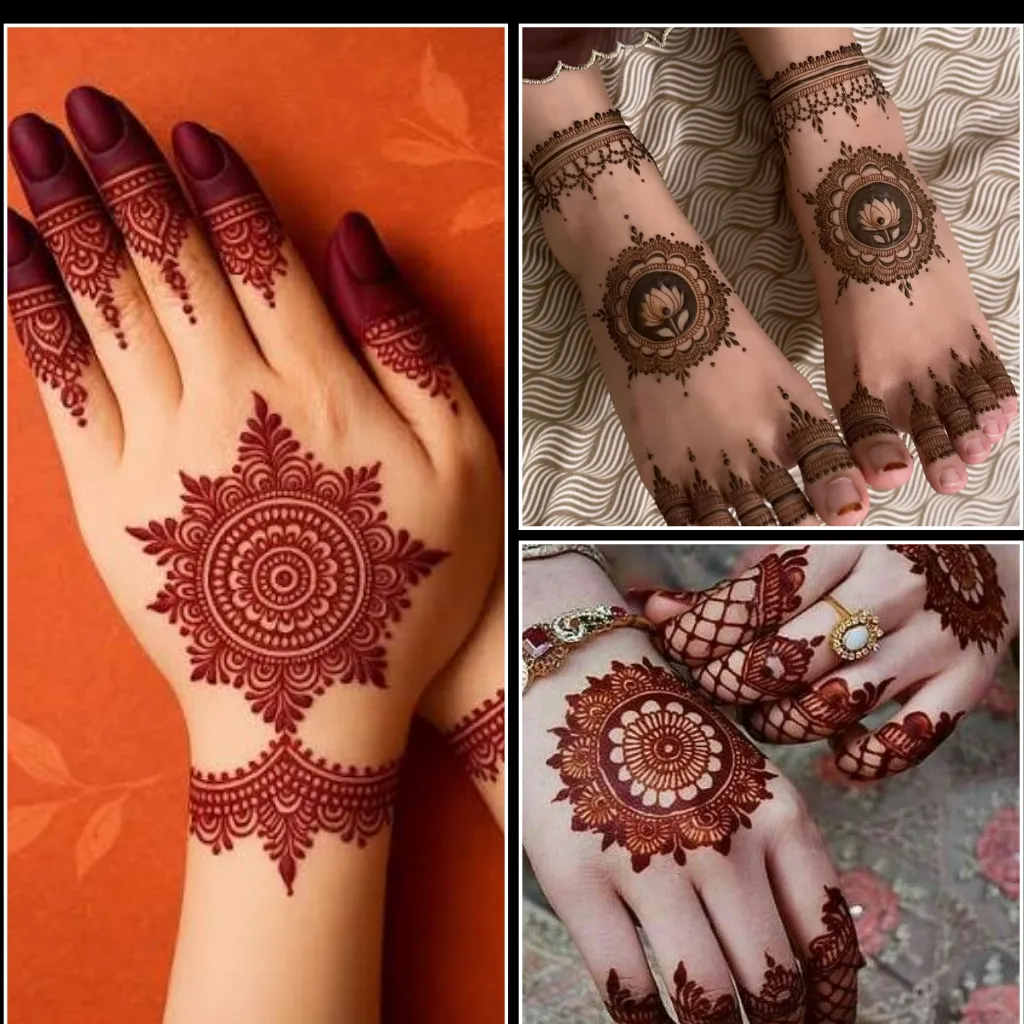
A mandala places a circular motif at the centre of the palm or back of the hand. It may be simple and open or filled with several rings of petals, dots, leaves, and geometry.
Mandala henna is versatile because it can work as:
- a simple henna design;
- a traditional palm pattern;
- a children’s design;
- a modern back-hand design;
- the centre of a larger bridal composition.
A simple mandala with light finger details creates a clean look. A larger mandala connected to bracelets, vines, and jaali becomes more formal.
10. Finger-Tip Dip — Cap Design
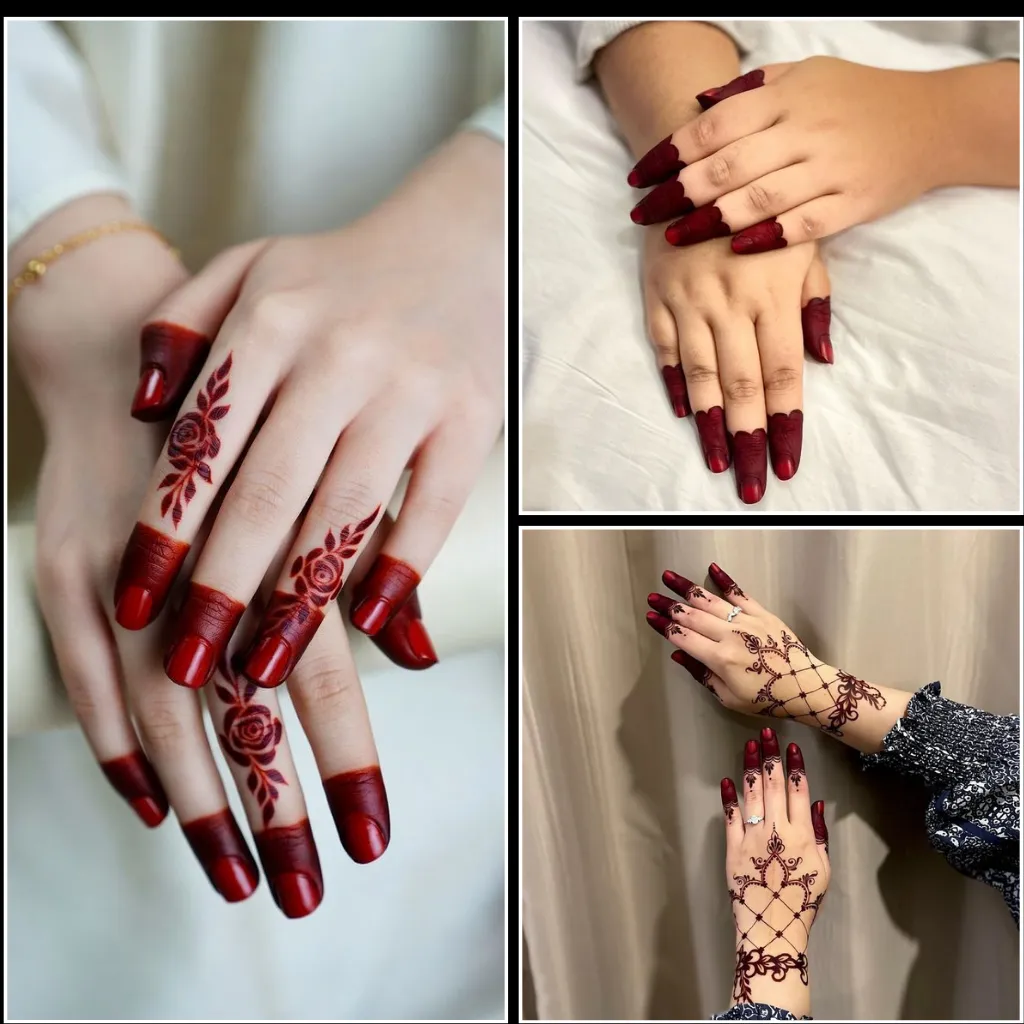
In a fingertip dip design, the ends of the fingers are filled or heavily patterned. This creates a bold contrast against a lighter hand design.
The fingertips may be:
- fully covered;
- shaped into arches;
- bordered with dots;
- connected to fine finger trails;
- paired with a central mandala.
This traditional detail can be styled in a surprisingly modern way when the rest of the hand remains minimal.
11. Symmetrical Gulf or Khaleeji Split
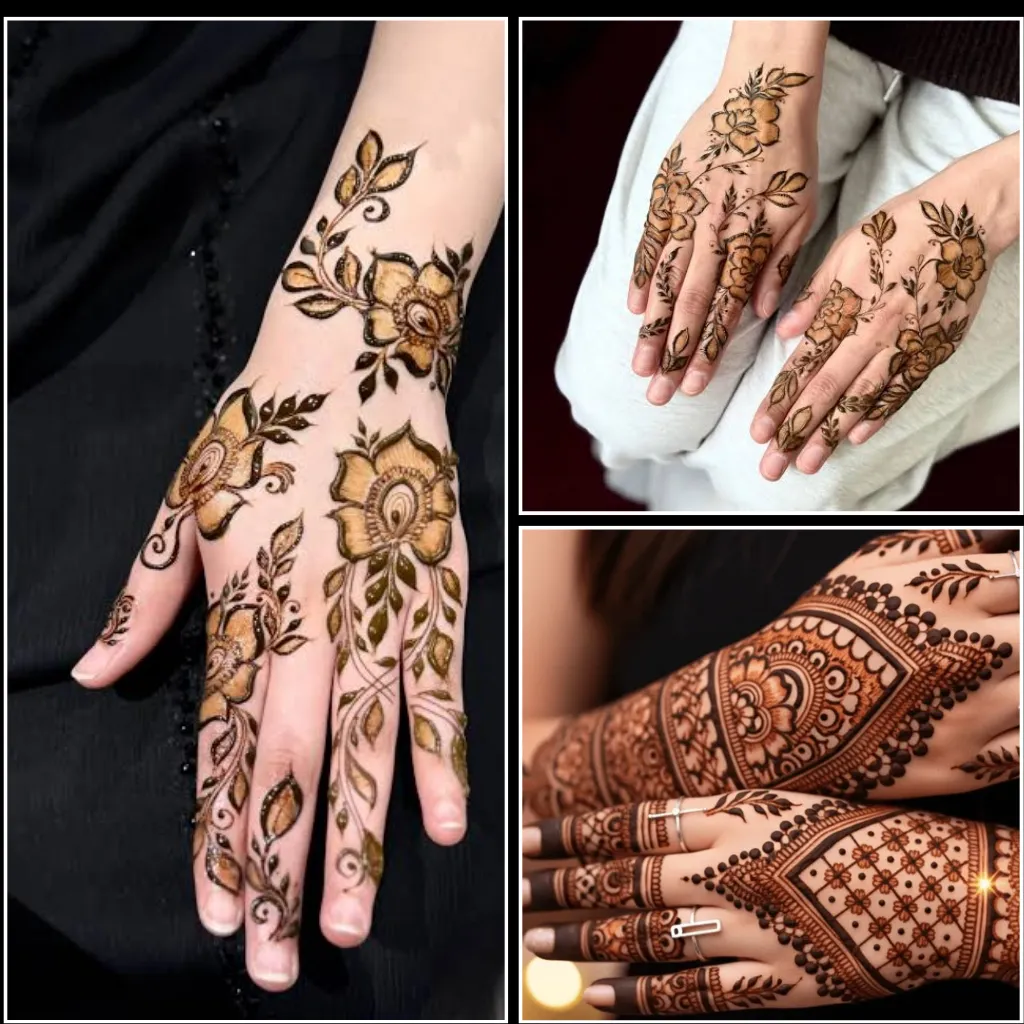
This design is divided between both hands. When the palms or back hands are placed together, the pattern forms one complete flower, mandala, arch, or bridal composition.
It creates a strong visual effect in photographs and works particularly well for:
- brides;
- engagements;
- henna nights;
- coordinated Eid designs;
- matching sister or family henna.
12. Architecture Arches
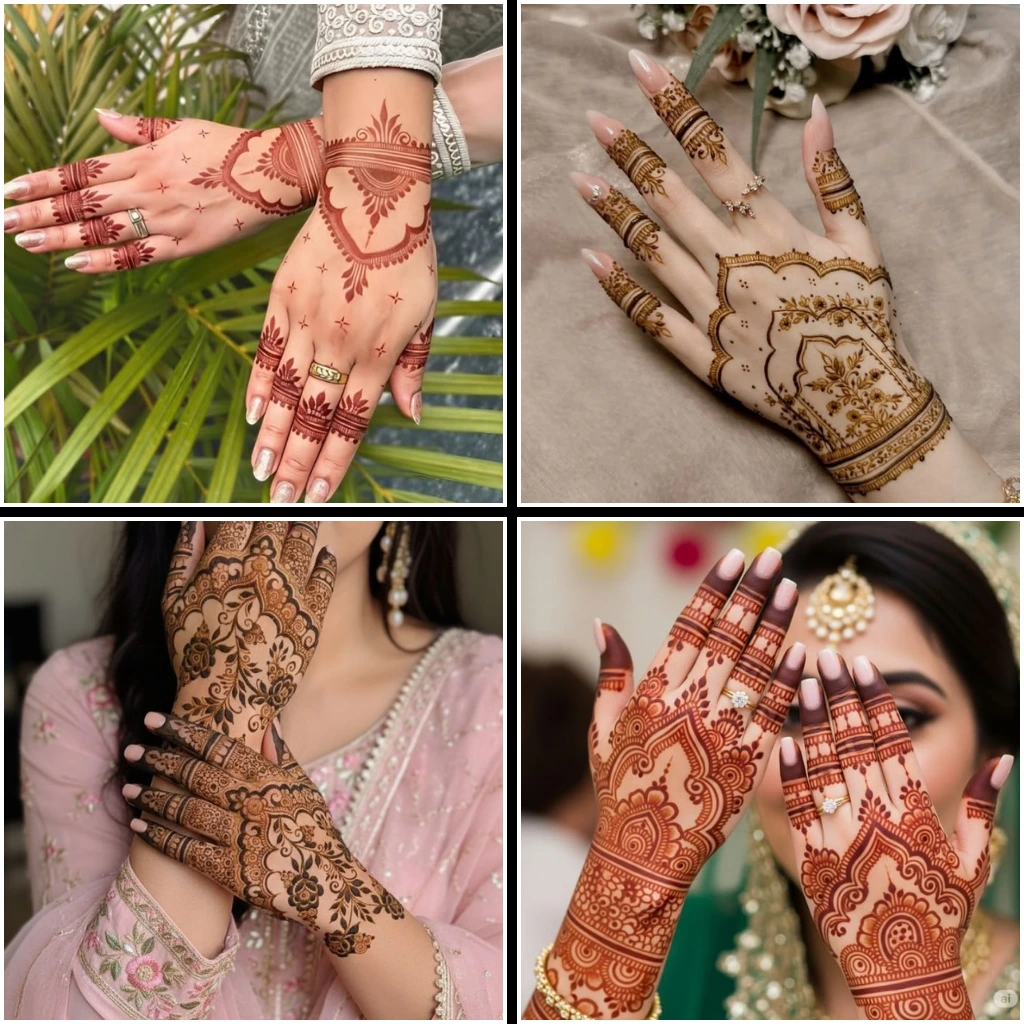
Architecture-inspired henna uses domes, windows, arches, frames, and ornamental borders. These shapes can surround florals, names, mandalas, or wedding symbols.
The style feels elegant and structured, making it suitable for:
- bridal palms;
- personalized wedding motifs;
- Marwari mehndi;
- Indo-Arabic fusion;
- back-hand statement designs.
13. Calligraphy Scripts
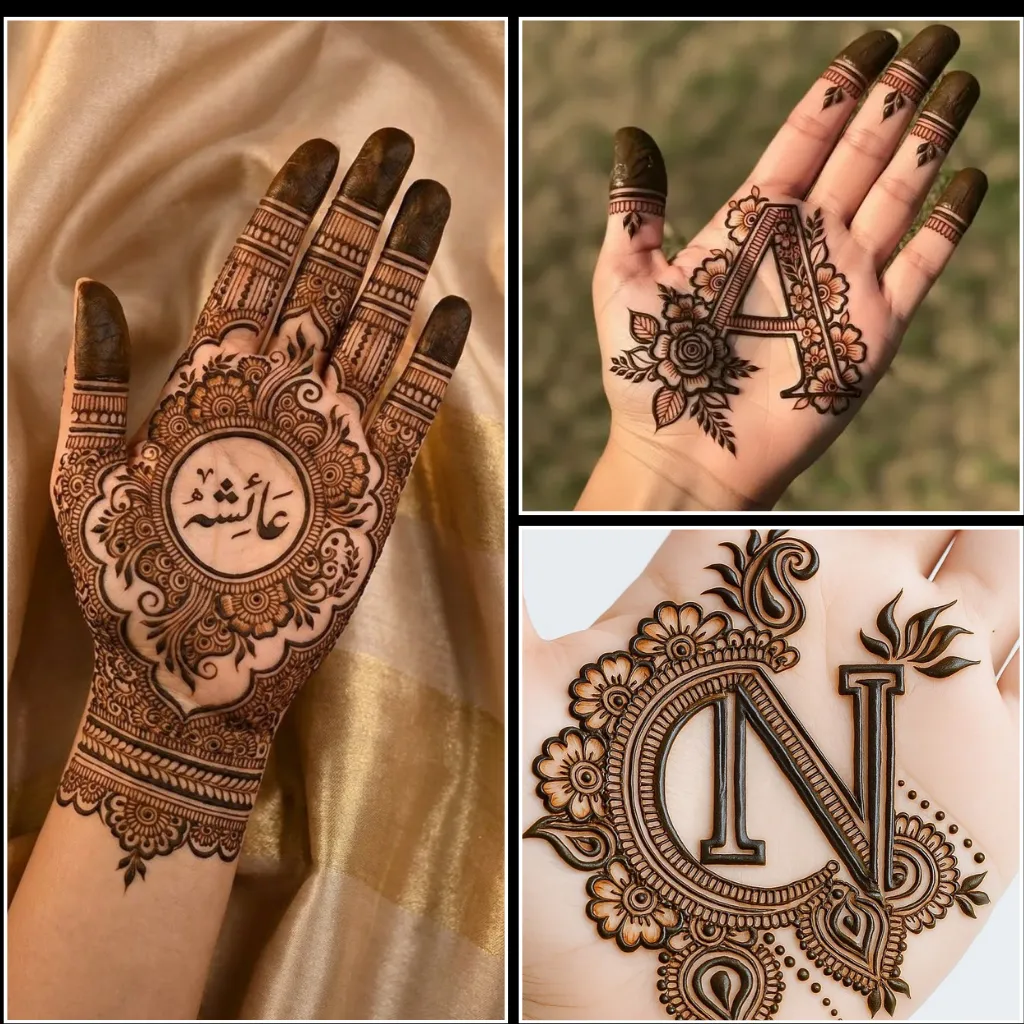
Calligraphy henna may include a name, initials, wedding date, short word, or meaningful phrase integrated into the larger design.
The script should not look added as an afterthought. A skilled henna artist can frame it through:
- vines;
- arches;
- a heart or mandala;
- wrist jewelry patterns;
- floral borders;
- negative space.
For Arabic calligraphy, spelling and readability should be confirmed before application.
Flowing and Negative-Space Henna Styles
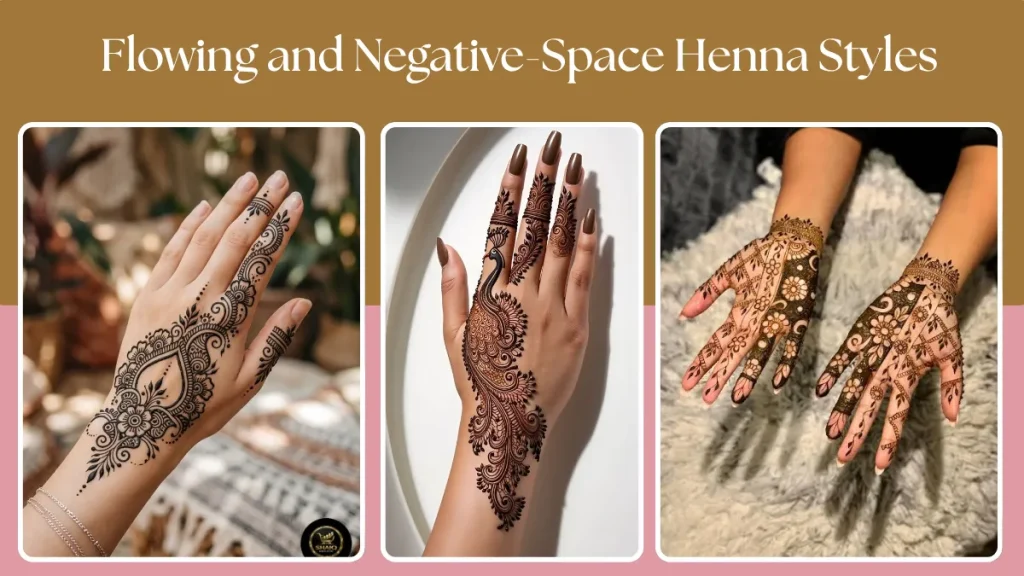
14. Negative-Space Rose
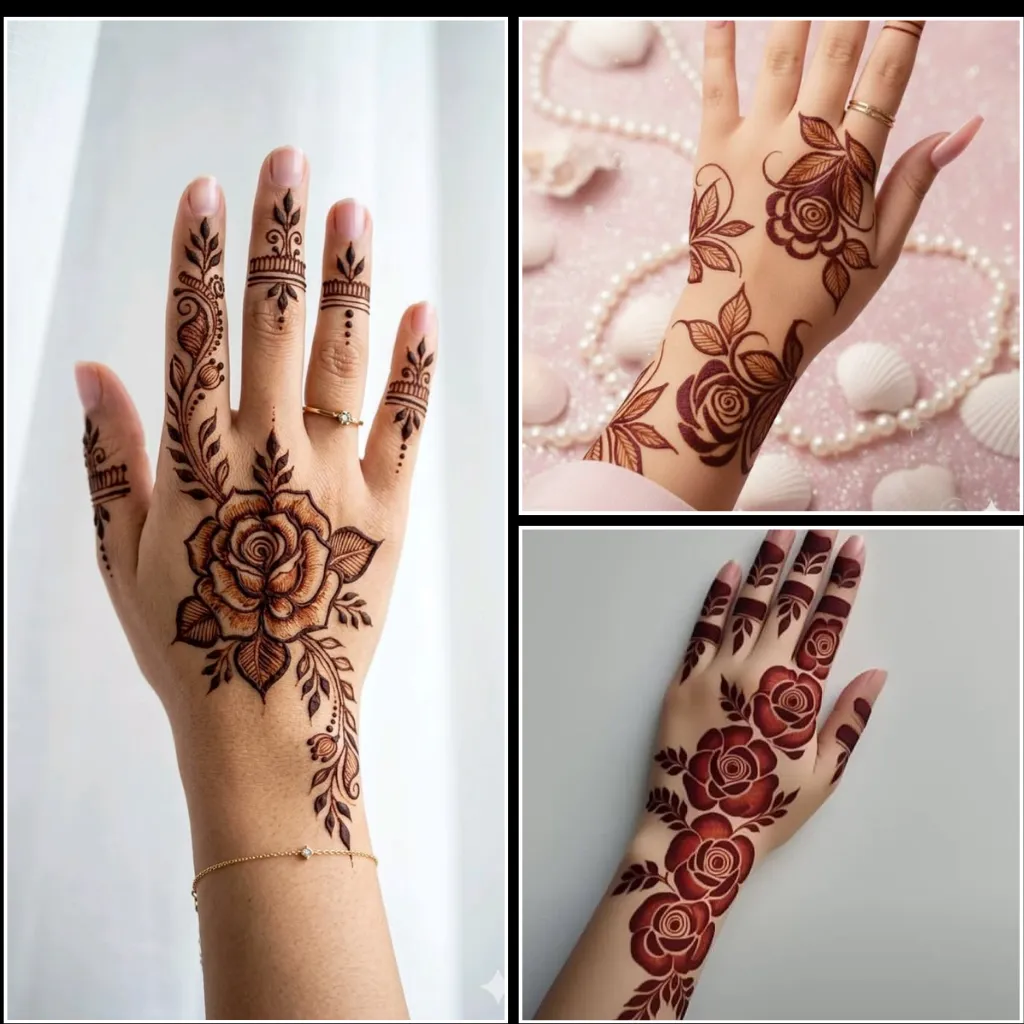
A negative-space rose is formed partly through the henna and partly through the uncovered skin. Instead of filling every petal, the artist uses outlines, shading, and open sections to define the flower.
It offers a clean, modern finish and can be placed:
- on the back hand;
- beside the thumb;
- on the wrist;
- as part of a floral trail;
- within a bridal design.
15. The “S” Curve
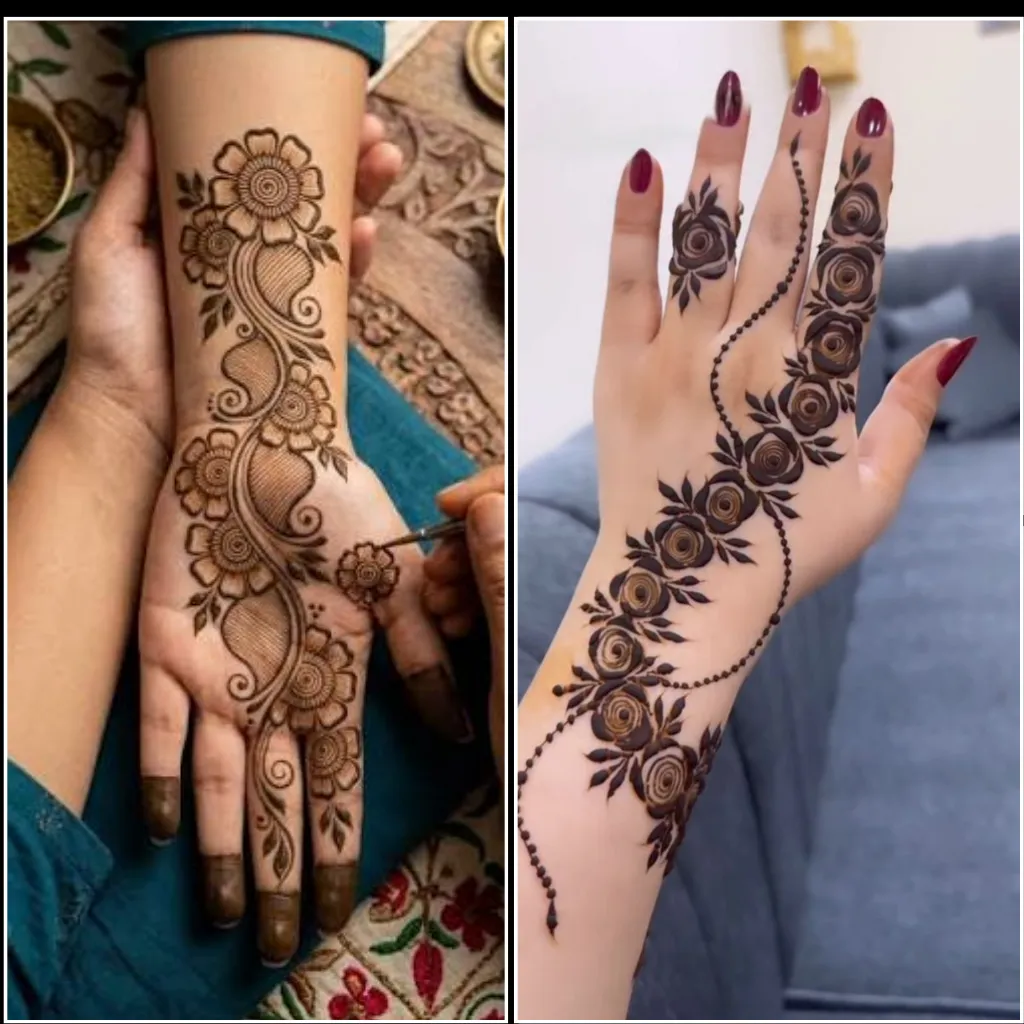
The S-Curve moves diagonally across the hand in a smooth, flowing line. Flowers, paisleys, leaves, or geometric details follow the curve.
It can make the hand look visually longer and is one of the most adaptable easy henna designs.
A light S-Curve suits everyday beauty, while a fuller version can extend from the wrist toward the index finger for weddings or Eid.
16. Deconstructed Paisleys
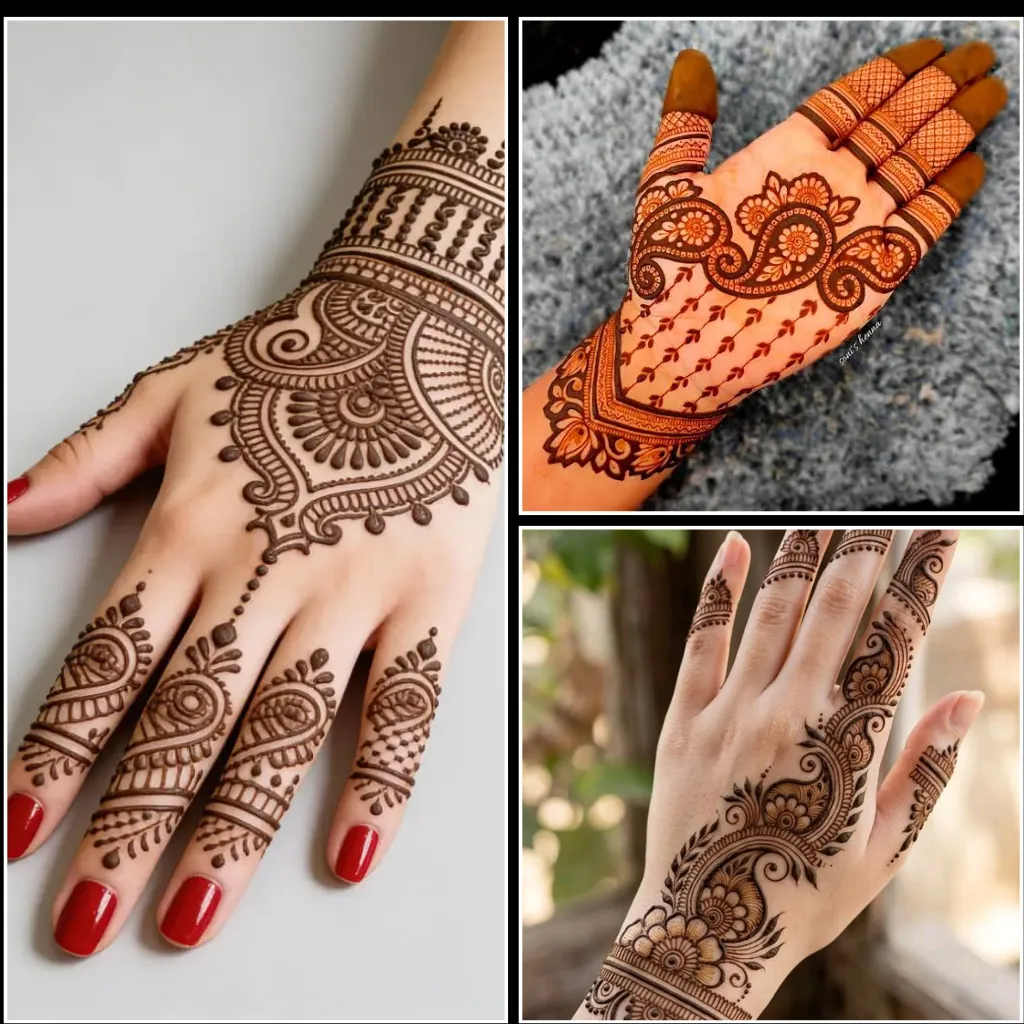
Traditional paisleys are usually complete teardrop forms filled with detail. Deconstructed paisleys separate the curves, petals, dots, and inner shapes and rearrange them into a lighter composition.
The result feels artistic and contemporary while still referencing traditional mehndi.
This works well for women who like cultural patterns but do not want a dense, conventional layout.
17. The Elbow Glove
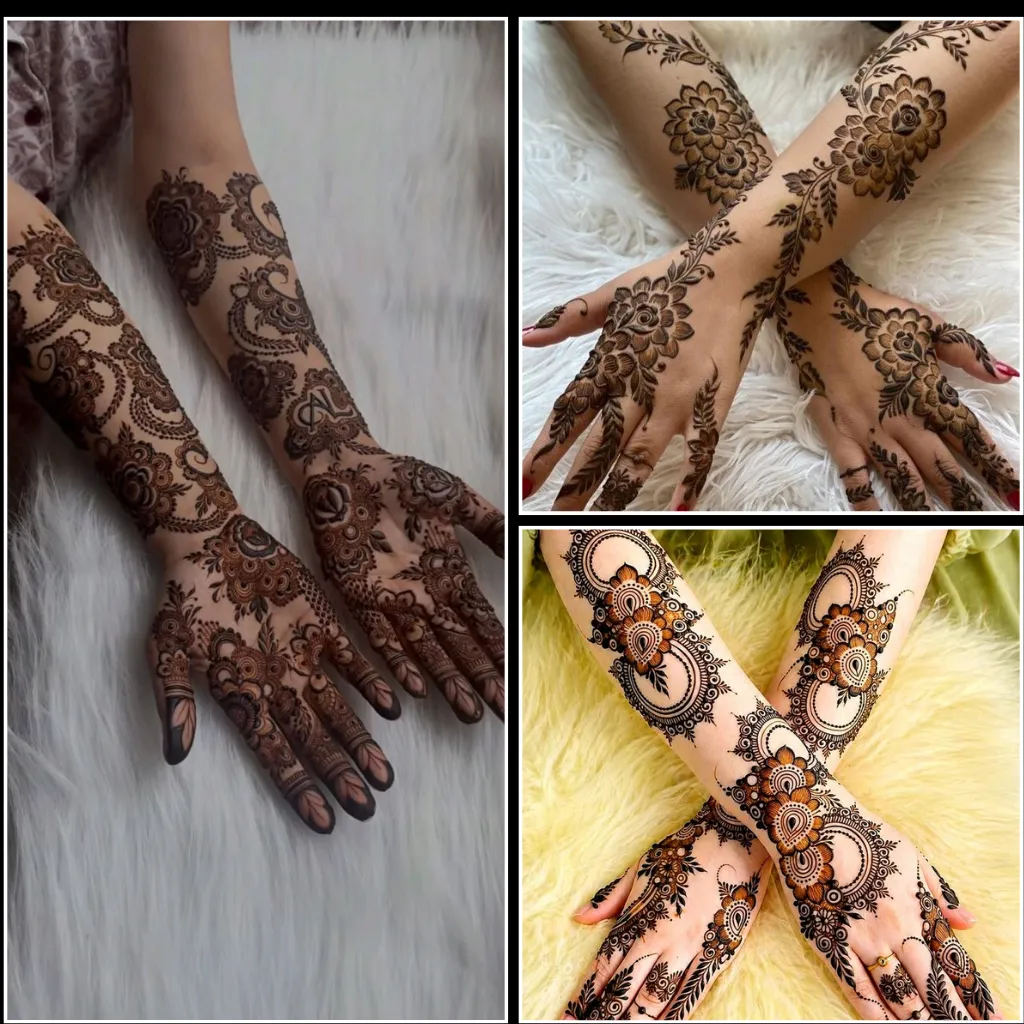
The Elbow Glove describes extensive coverage rather than one specific motif. Henna begins at the fingers and hands and continues toward the elbow, creating the appearance of an ornamental glove.
The design may contain:
- flowers;
- peacocks;
- paisleys;
- jaali;
- arches;
- jewelry chains;
- personalized bridal details.
This style is mainly suited to bridal celebrations and major events because it requires significant application time and planning.
18. Side-Palm Sweep
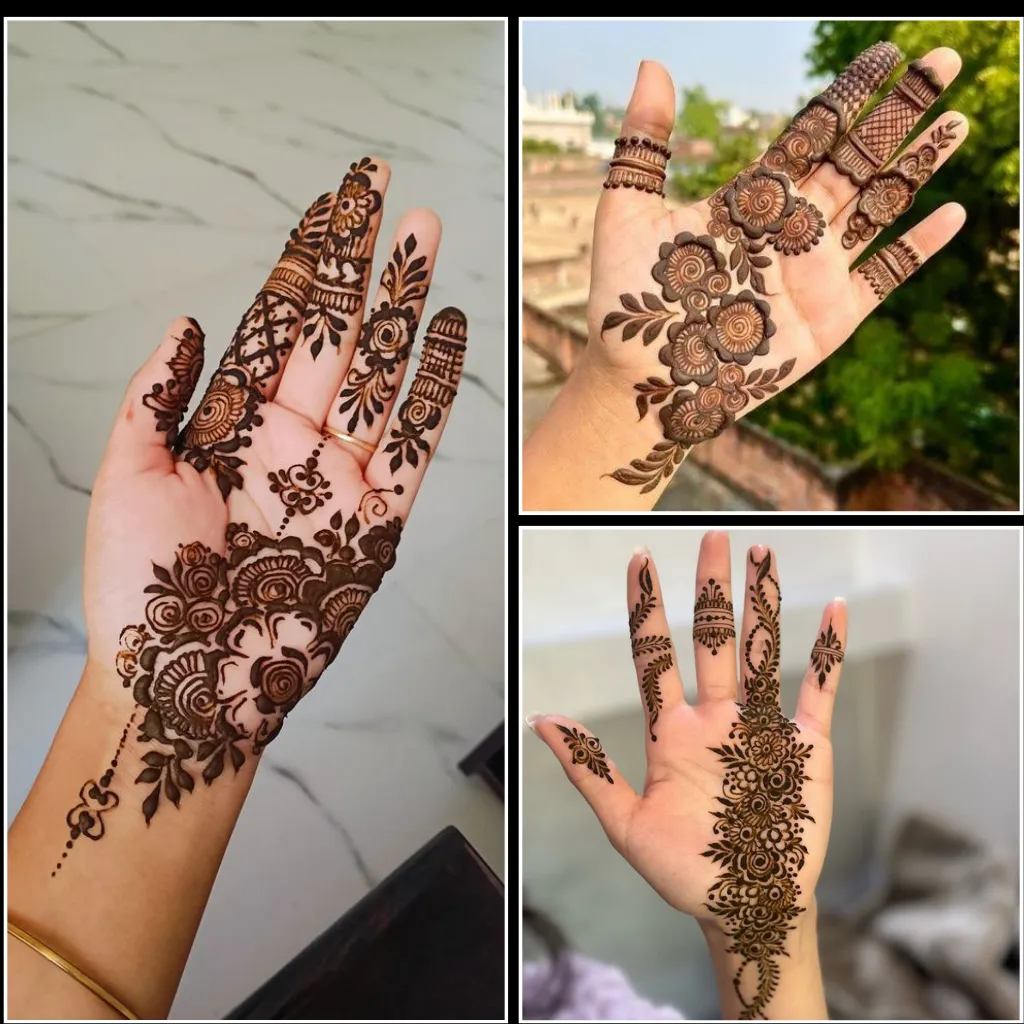
The Side-Palm Sweep follows one edge of the hand, leaving the centre relatively open. It may begin near the little finger and move toward the wrist, or travel along the thumb side.
It is elegant and practical for women who want visible henna without full coverage.
It can be adapted into:
- a floral sweep;
- a leafy trail;
- geometric Moroccan lines;
- an Arabic vine;
- a simple kids’ design.
19. Thumb-Heavy Trail
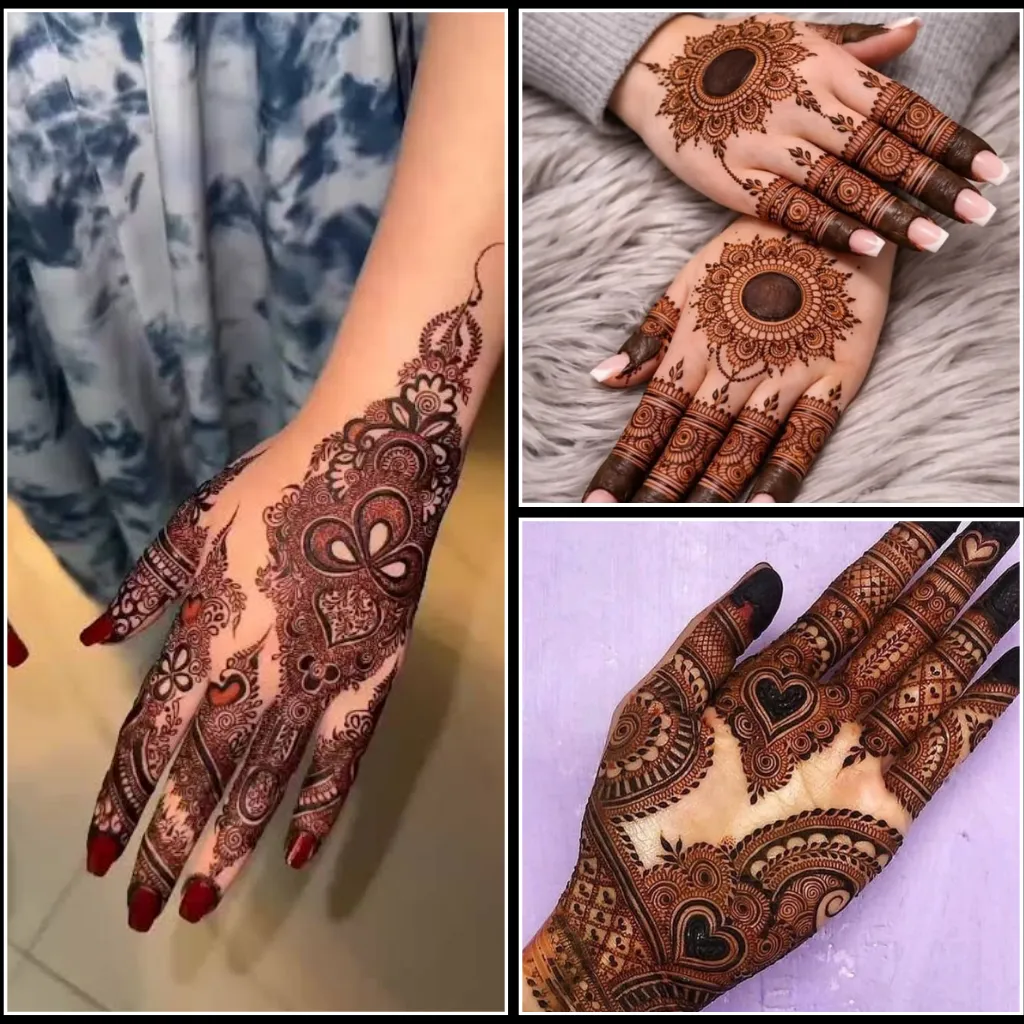
The main motif begins around the thumb and moves toward the wrist, palm, or index finger. This creates an asymmetrical focal point that works well with rings and bracelets.
A thumb-heavy layout may include:
- roses;
- leaves;
- paisleys;
- a mini mandala;
- fine jaali;
- shaded petals.
It is an excellent modern Arabic henna option because it creates impact without covering the entire hand.
Floral and Nature-Inspired Henna
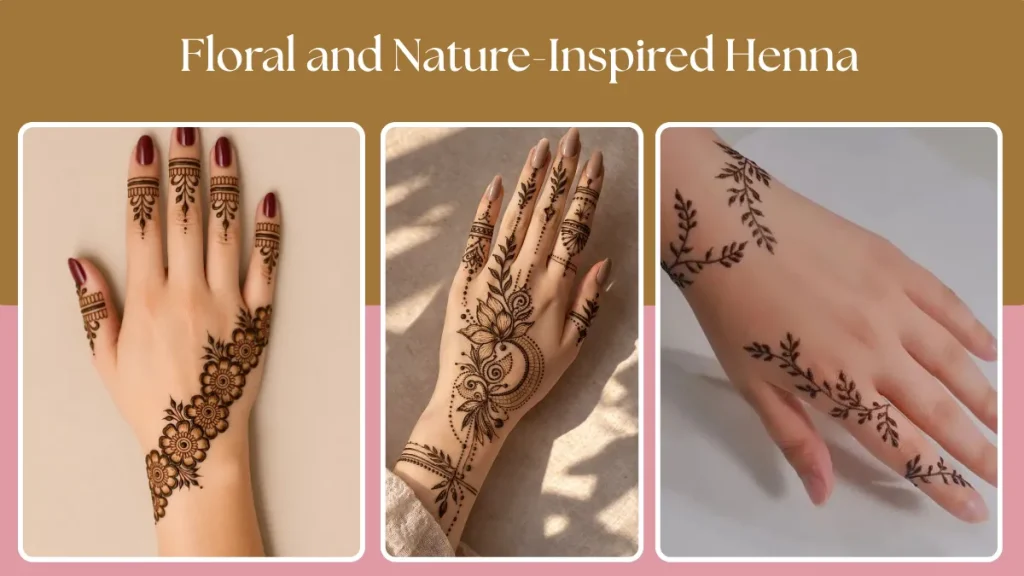
20. Bold Shaded Peacocks
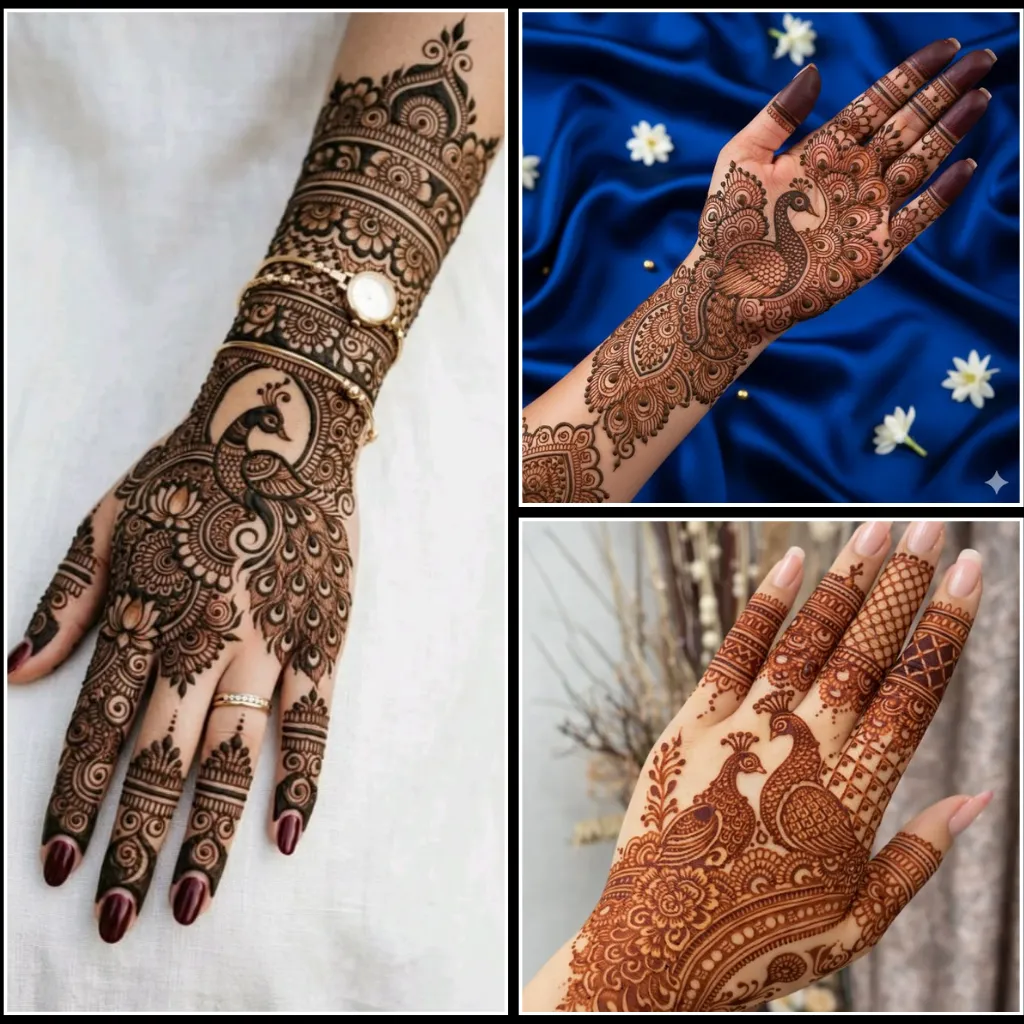
Peacock henna is strongly associated with ornate Indian and Pakistani mehndi. A large peacock may appear on the palm, wrist, or forearm, with shaded feathers connected to flowers and paisleys.
This style suits:
- brides;
- traditional weddings;
- detailed engagement henna;
- full-palm designs;
- Indo-Arabic fusion.
The shading gives the peacock depth, while open areas keep the motif readable.
21. Mesh or Jaali Work
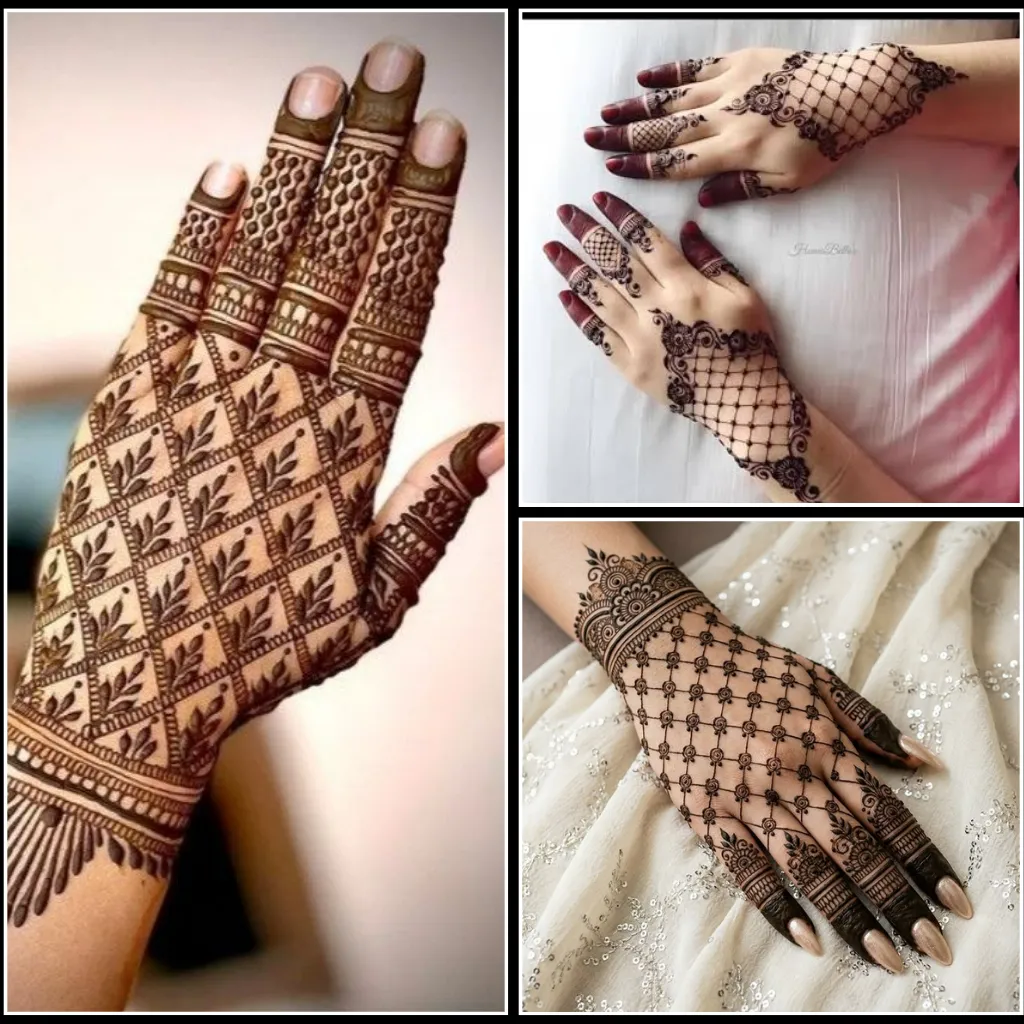
Jaali uses intersecting lines to create a net-like pattern. Small dots, leaves, flowers, or diamonds can decorate each intersection.
It can be used:
- across the fingers;
- around the wrist;
- inside an arch;
- behind a flower;
- as part of a full bridal hand.
Light jaali adds texture to Arabic designs, while denser mesh helps connect Indian or Marwari patterns.
22. Cascading Roses
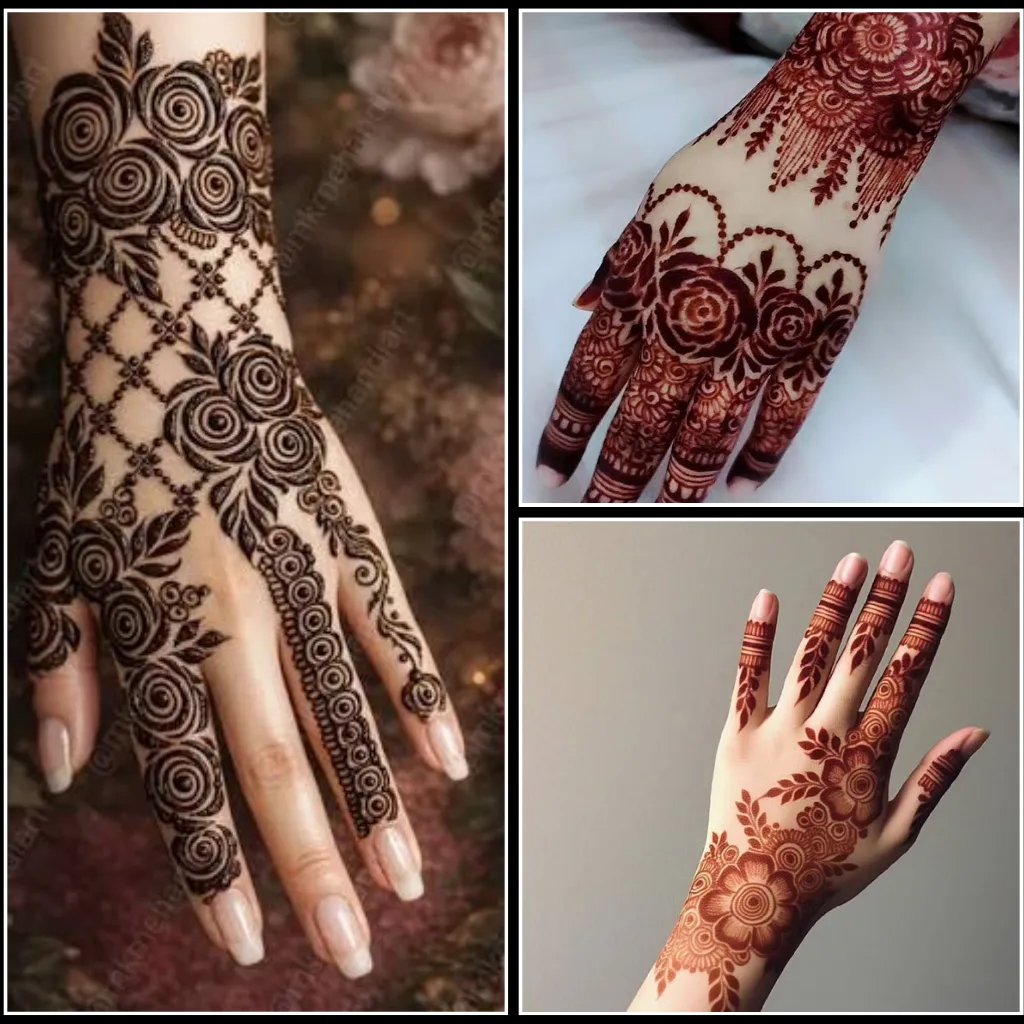
Cascading Roses features several flowers moving diagonally from the wrist toward the fingers or from the hand onto the forearm.
The roses may gradually change in size, creating a natural sense of movement.
This style is romantic and highly photographic, making it suitable for:
- engagements;
- bridal showers;
- weddings;
- Eid;
- feminine formal styling.
23. Leafy Veins
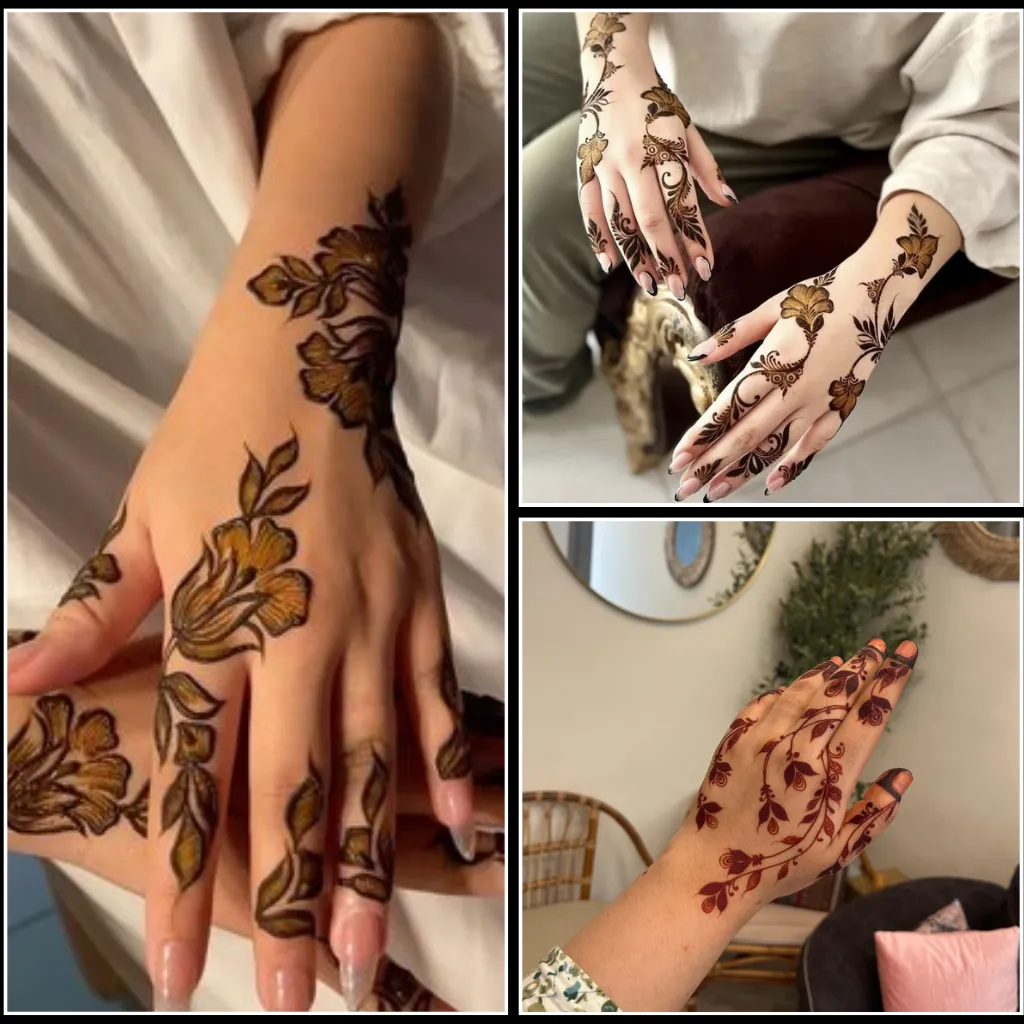
Leafy Veins uses thin branches and delicate leaves that spread naturally across the skin. The design may resemble a plant’s vein structure or a fine botanical sketch.
It is especially suitable for:
- simple henna designs;
- minimal Arabic henna;
- back-hand trails;
- children and teenagers;
- wrist and finger placement.
24. Lotus Chains
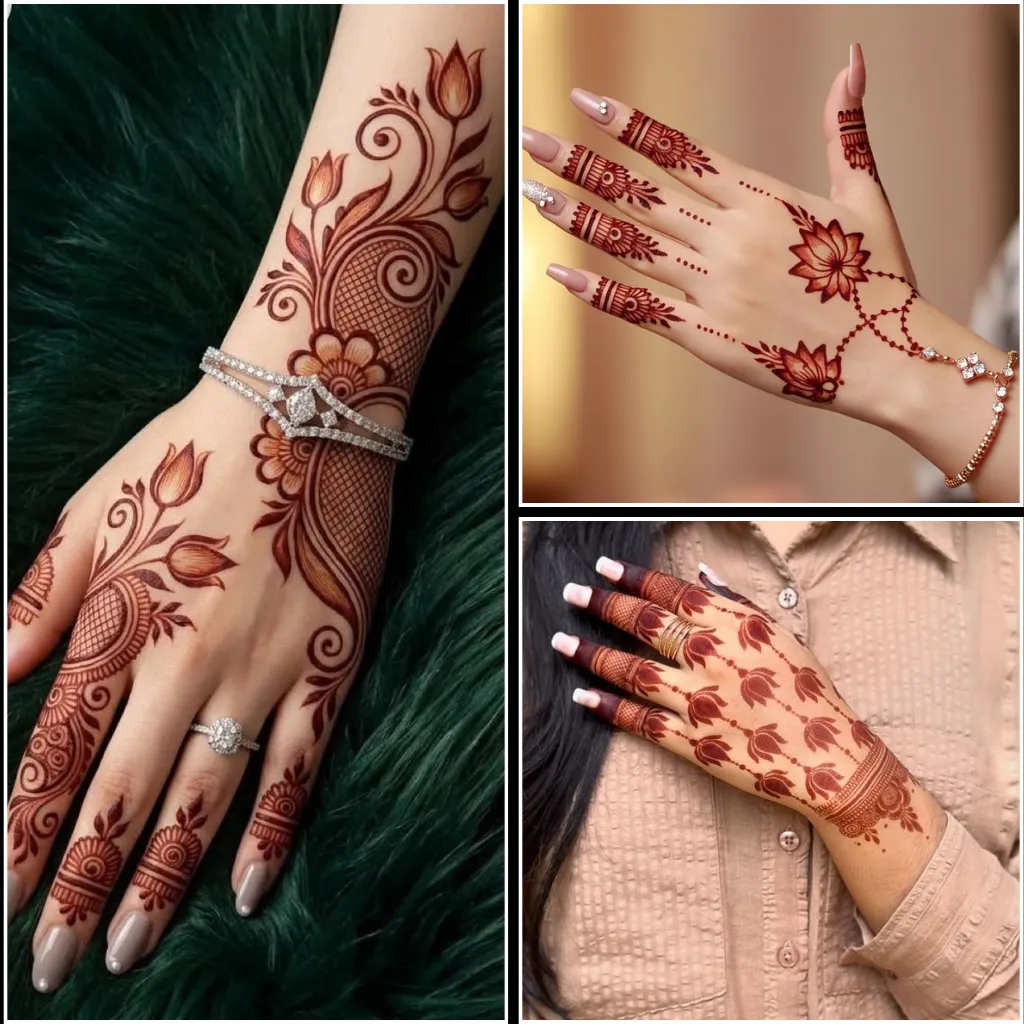
Lotus flowers are linked through dotted chains, leaves, hanging details, or bracelet-like lines. The pattern may feel floral, spiritual, jewelry-inspired, or bridal depending on the amount of detail.
Lotus Chains work well on:
- the back hand;
- wrists;
- forearms;
- ankles;
- bridal feet.
25. Botanical Garden
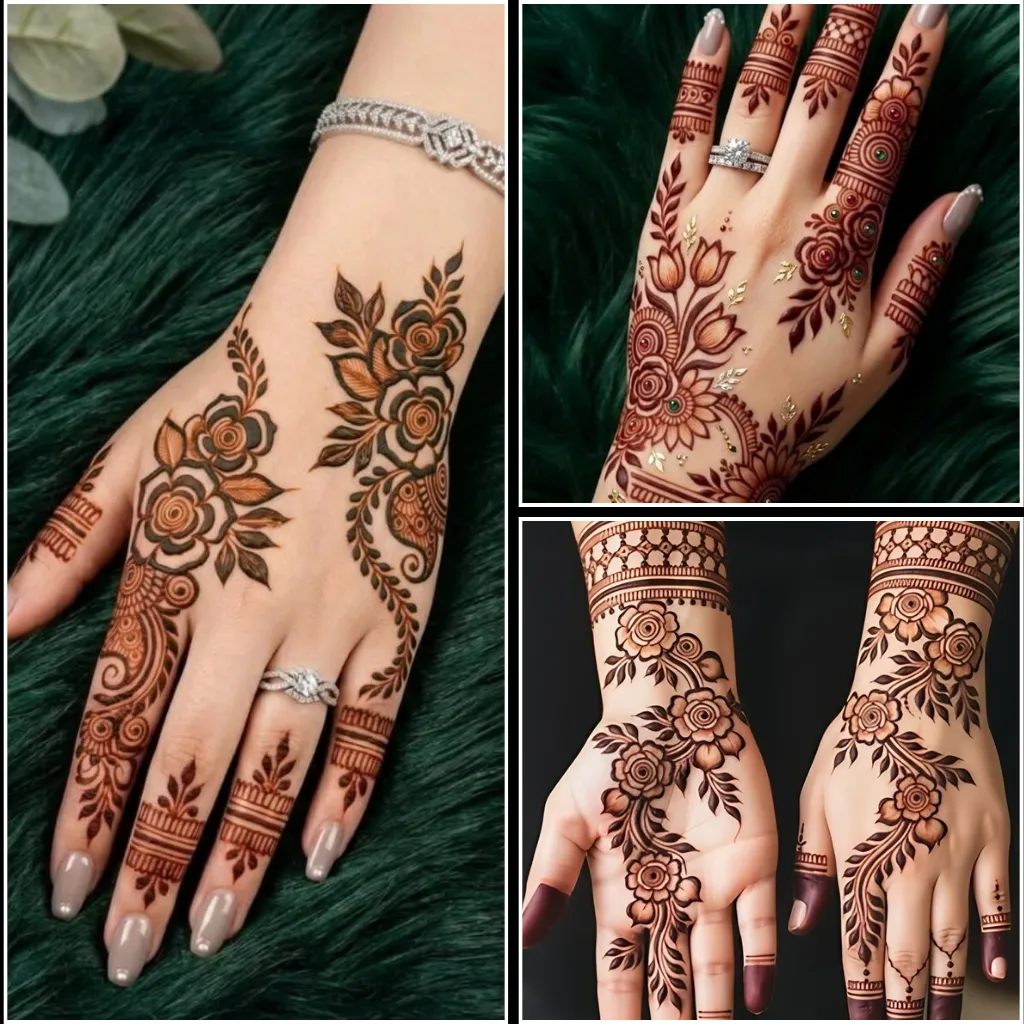
Botanical Garden henna brings several natural elements into one composition. It may include roses, lotus flowers, small buds, leafy vines, curved stems, and shaded petals.
Unlike a single floral trail, the Botanical Garden feels fuller and more layered.
It can remain open and Arabic in character or become denser for bridal and Indo-Arabic designs.
Quick Henna Style Comparison
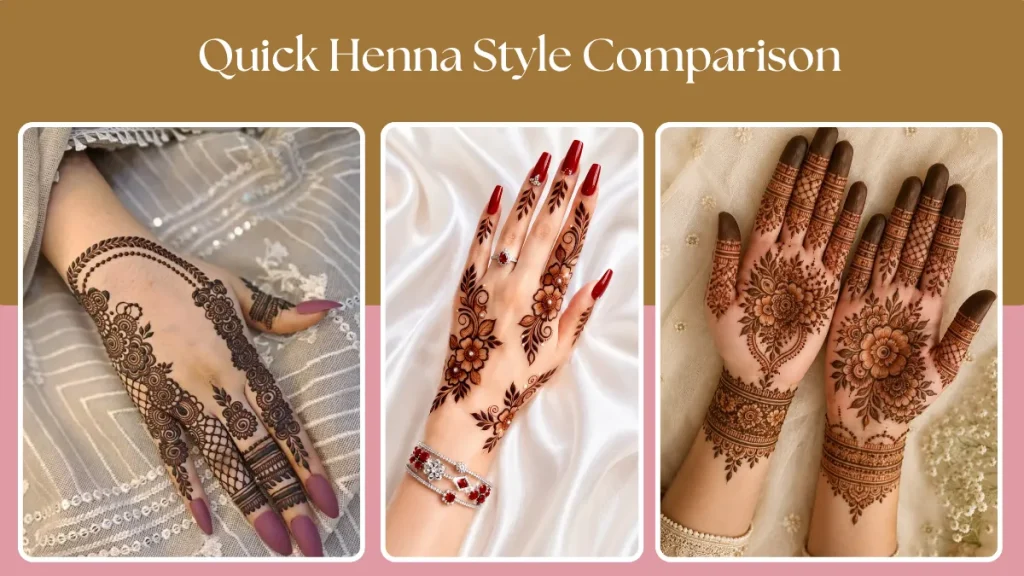
| Your Preferred Look | Styles to Consider |
| Light and minimal | Khafif, Leafy Veins, Side-Palm Sweep |
| Bold Arabic floral | Khaleeji, Cascading Roses, Floating Vine |
| Detailed bridal | Marwari, Gulf Royal Bridal, Elbow Glove |
| Modern and artistic | Negative-Space Rose, S-Curve, Deconstructed Paisleys |
| Jewelry-inspired | Hathphool, Lotus Chains, Bracelet Henna |
| Structured and geometric | Moroccan, Architecture Arches, Jaali Work |
| Central and symmetrical | Mandala, Khaleeji Split, Finger-Tip Dip |
| Personalized | Calligraphy Scripts, bridal initials, custom motifs |
Simple and Easy Henna Designs
Simple henna designs can still look elegant when the placement and line work are carefully planned. The goal is not to remove all detail, but to use fewer elements more intentionally.
Popular easy henna designs include:
- one small mandala;
- a thin wrist bracelet;
- an S-shaped floral trail;
- a single rose beside the thumb;
- delicate fingertip lines;
- one leafy vine;
- a side-palm flower;
- tiny dots and leaves;
- a miniature hathphool;
- a narrow Moroccan finger pattern.
Simple designs are ideal for women who:
- have limited appointment time;
- want a subtle everyday style;
- need a work-friendly pattern;
- are new to henna;
- want their jewelry or outfit to remain the main focus.
An experienced henna artist can also simplify a bridal or Arabic reference design while preserving its key visual character.
Simple Henna Designs for Kids
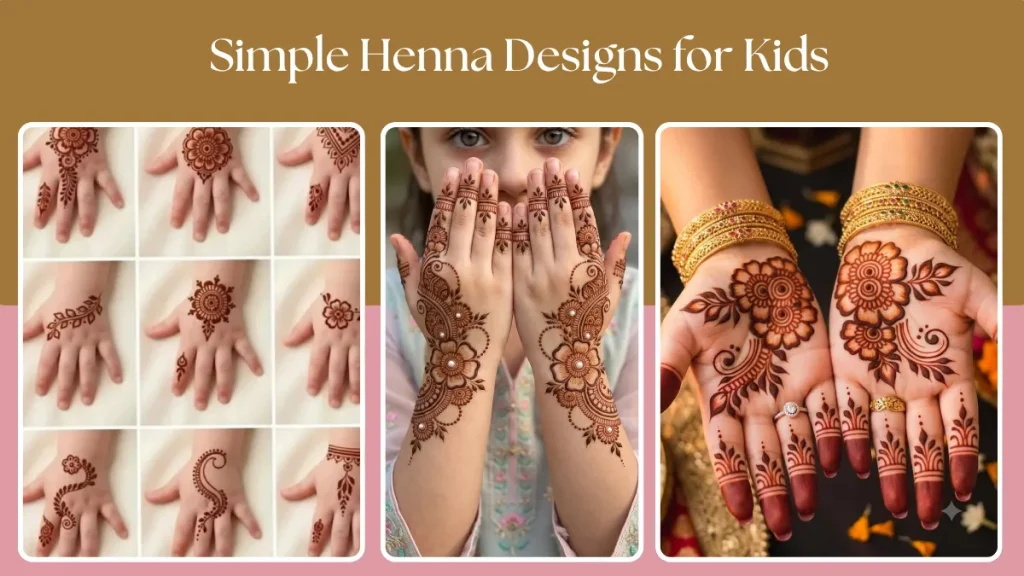
Henna for kids should feel fun, quick, and comfortable. Children may struggle to remain still for a long application, so smaller designs are usually more suitable than dense palm or arm coverage.
Beautiful simple henna designs for kids include:
- a tiny flower;
- a butterfly;
- stars and a crescent moon;
- a small heart vine;
- one mini mandala;
- a simple wrist bracelet;
- dots and leaves on one finger;
- a short leafy trail;
- a small cat or playful motif;
- matching sister designs.
A child’s henna appointment should prioritize:
- parental approval;
- natural henna with clearly confirmed ingredients;
- a short application time;
- simple placement;
- clean application tools;
- avoiding broken, irritated, or sensitive skin;
- enough supervision while the paste dries.
For very young children or anyone with known skin sensitivity, ask the salon about a small patch test before the full design.
Natural Henna, Black Henna and Black-Gold Body Art
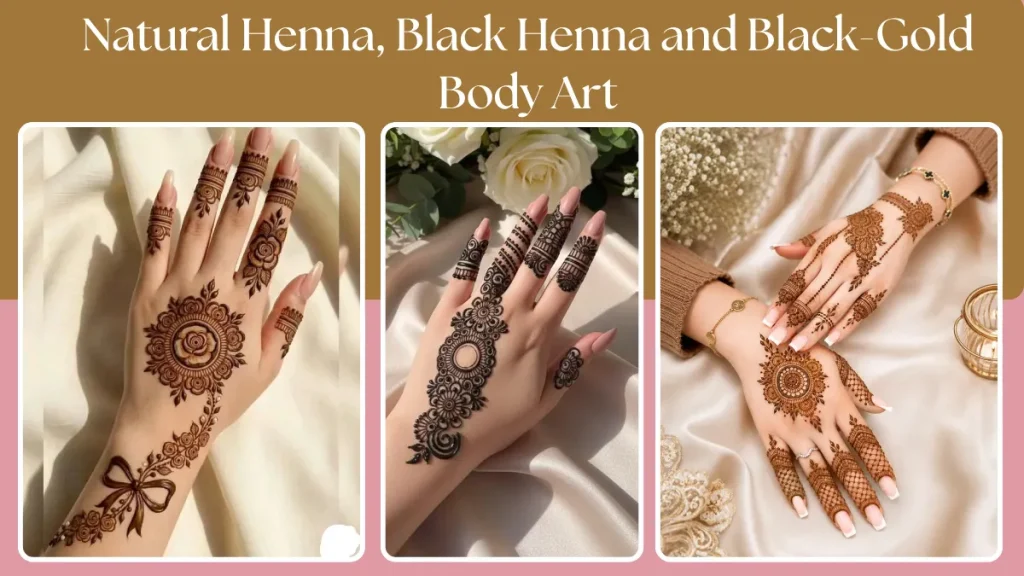
These terms should not be treated as though they are automatically the same product.
Natural Henna
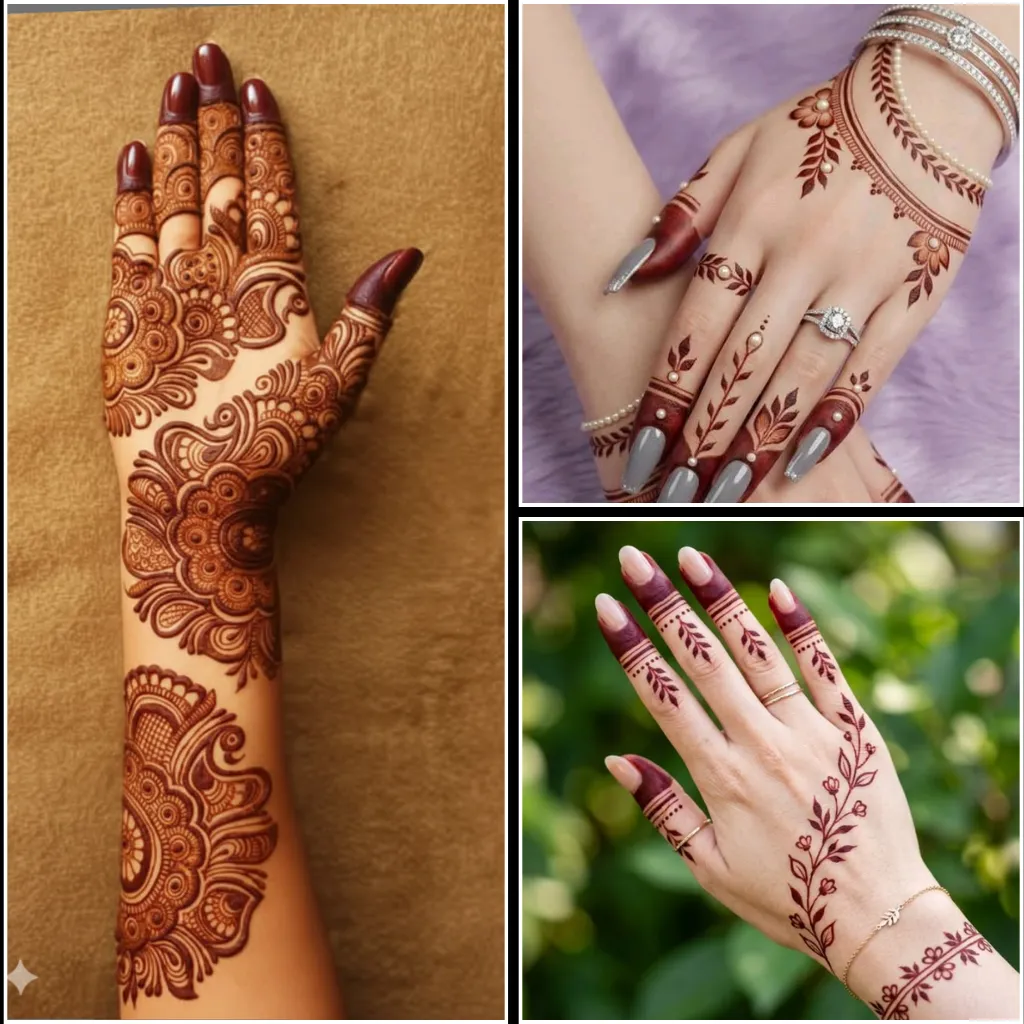
Aphrodite’s service information specifies the use of 100% natural henna made with high-quality ingredients.
Natural henna is the preferred direction for professional bridal, event, adult, and children’s designs. Always tell the artist about known skin sensitivities before application.
Black Henna
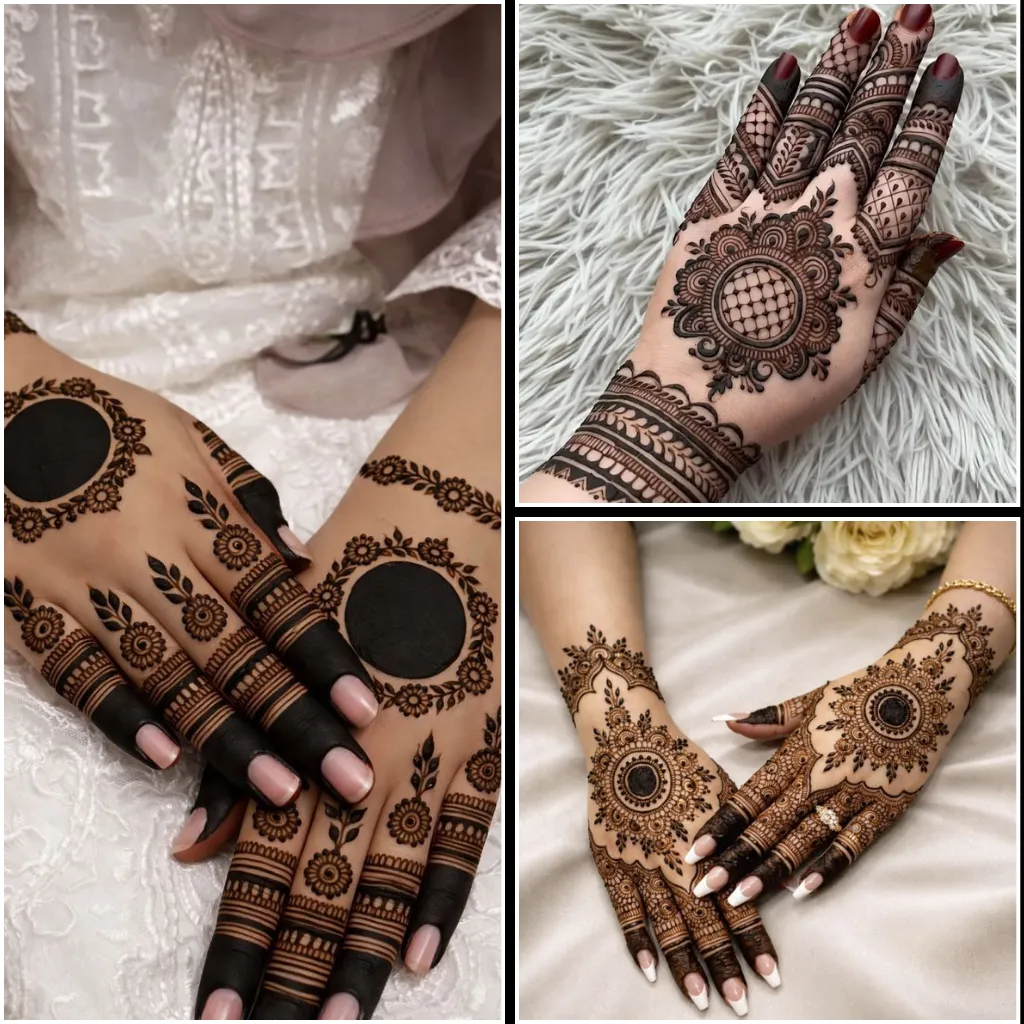
Products marketed as black henna should be approached carefully. Do not assume that an instant dark product has the same ingredients as natural henna.
Before allowing black henna to be applied—especially to children—ask for a clear ingredient list. Avoid products with unclear contents or those that promise an immediate jet-black skin stain without transparent product information.
Black-Gold Henna
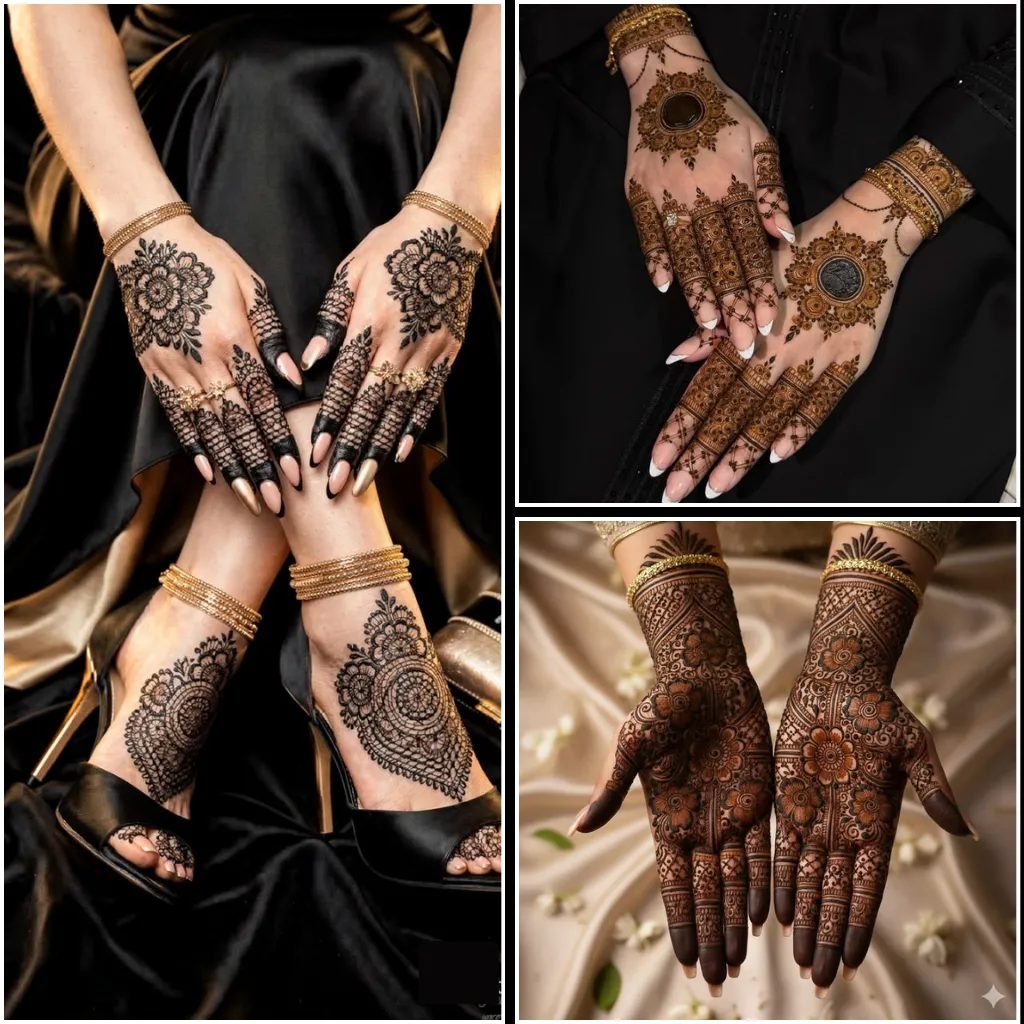
“Black gold henna” may refer to a decorative body-art style combining dark and metallic-looking accents rather than one recognized natural-henna category.
Gold body-art paste, glitter, stones, and metallic cosmetic details can sometimes be added around a finished design for photography or special events. These accents should be clearly identified as cosmetic decoration rather than described as natural henna.
Choosing Henna for Different Occasions
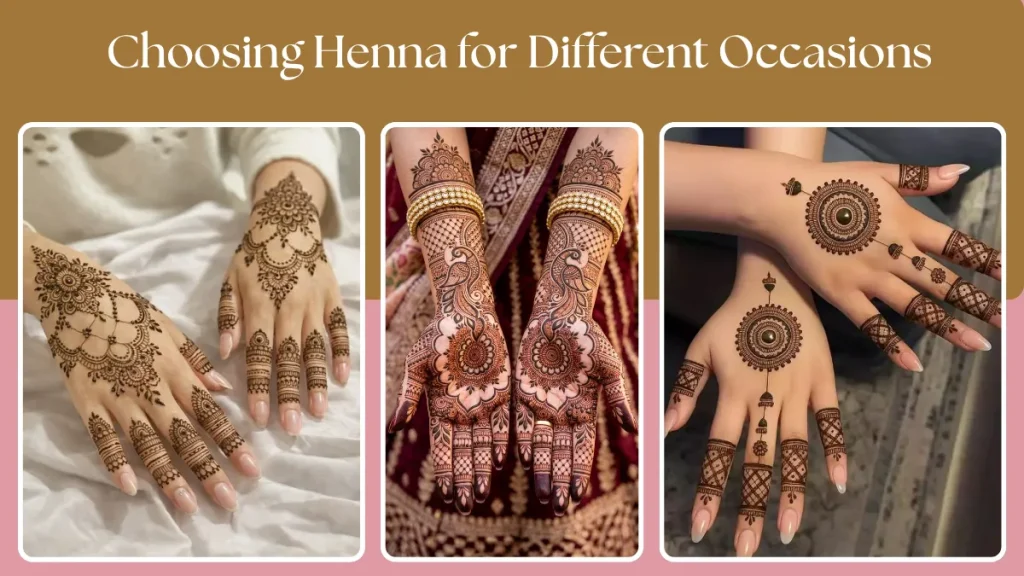
Henna for Eid
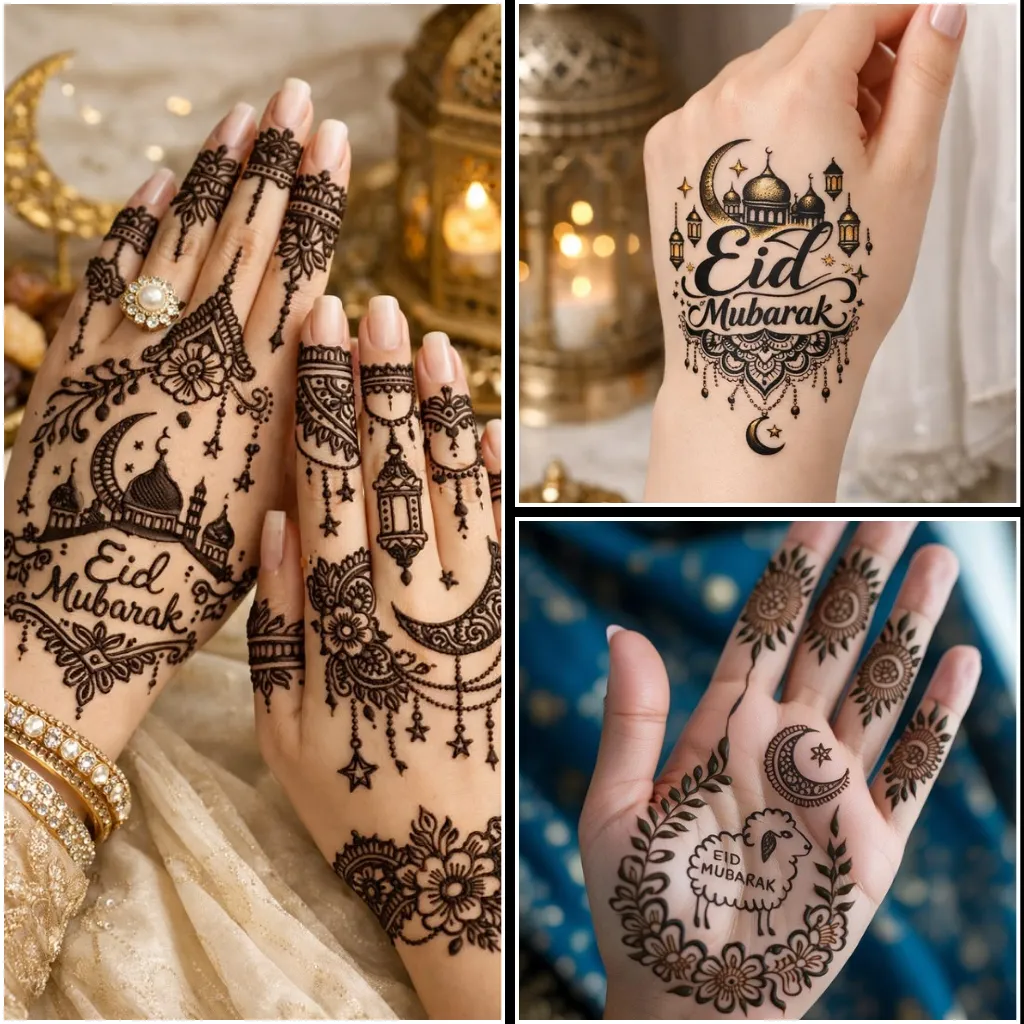
Eid henna often balances festivity with comfort. Khaleeji flowers, Pakistani vines, mandalas, bracelet patterns, and light finger details all work beautifully.
Choose a lighter style when you have several gatherings or need something practical. Choose fuller hands when henna is a major part of your Eid preparation.
Bridal Henna
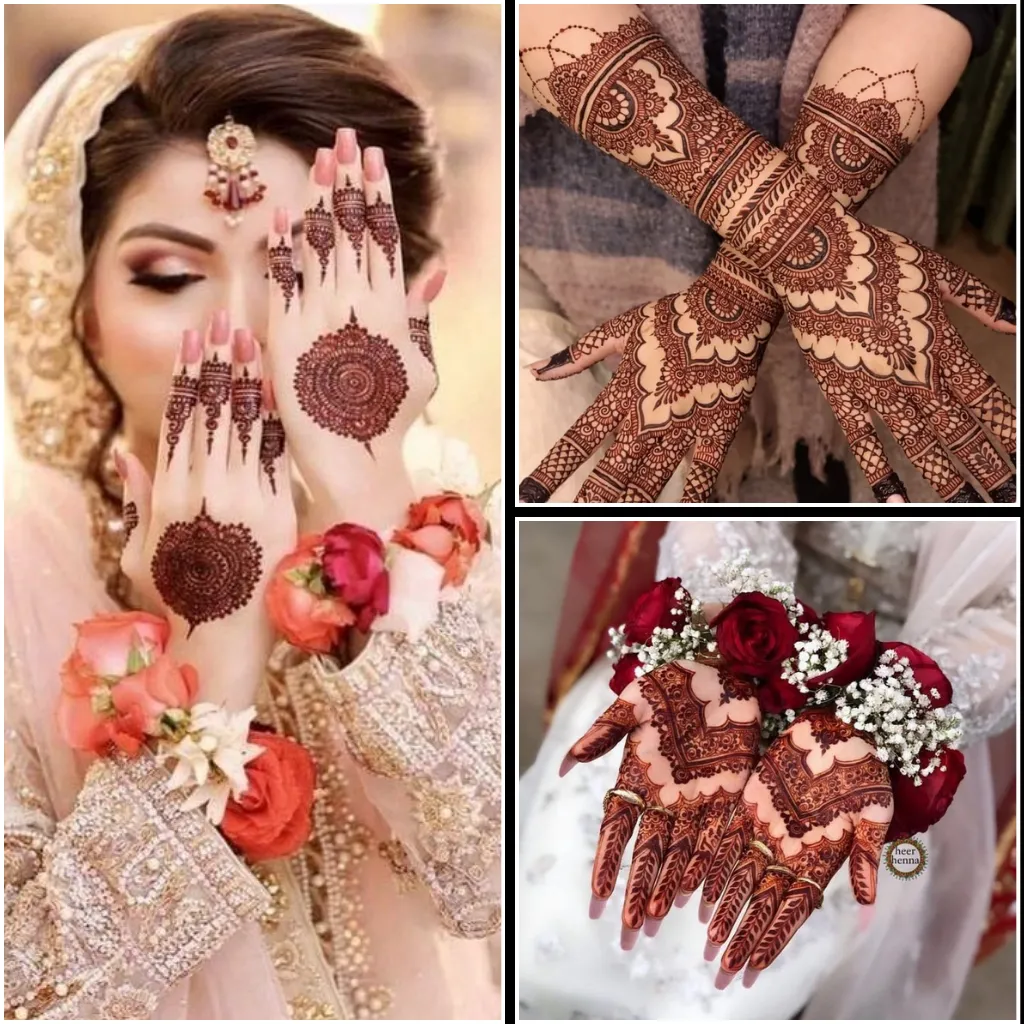
Bridal henna usually requires the most planning. Consider:
- front and back hands;
- arm length;
- feet and ankles;
- outfit sleeves;
- jewelry;
- cultural style;
- photography;
- initials or personalized motifs;
- application and drying time.
Gulf Royal Bridal, Marwari, Indo-Arabic, peacocks, elbow-glove coverage, jaali, and architectural arches are particularly suitable for bridal compositions.
Henna for Engagements and Wedding Guests
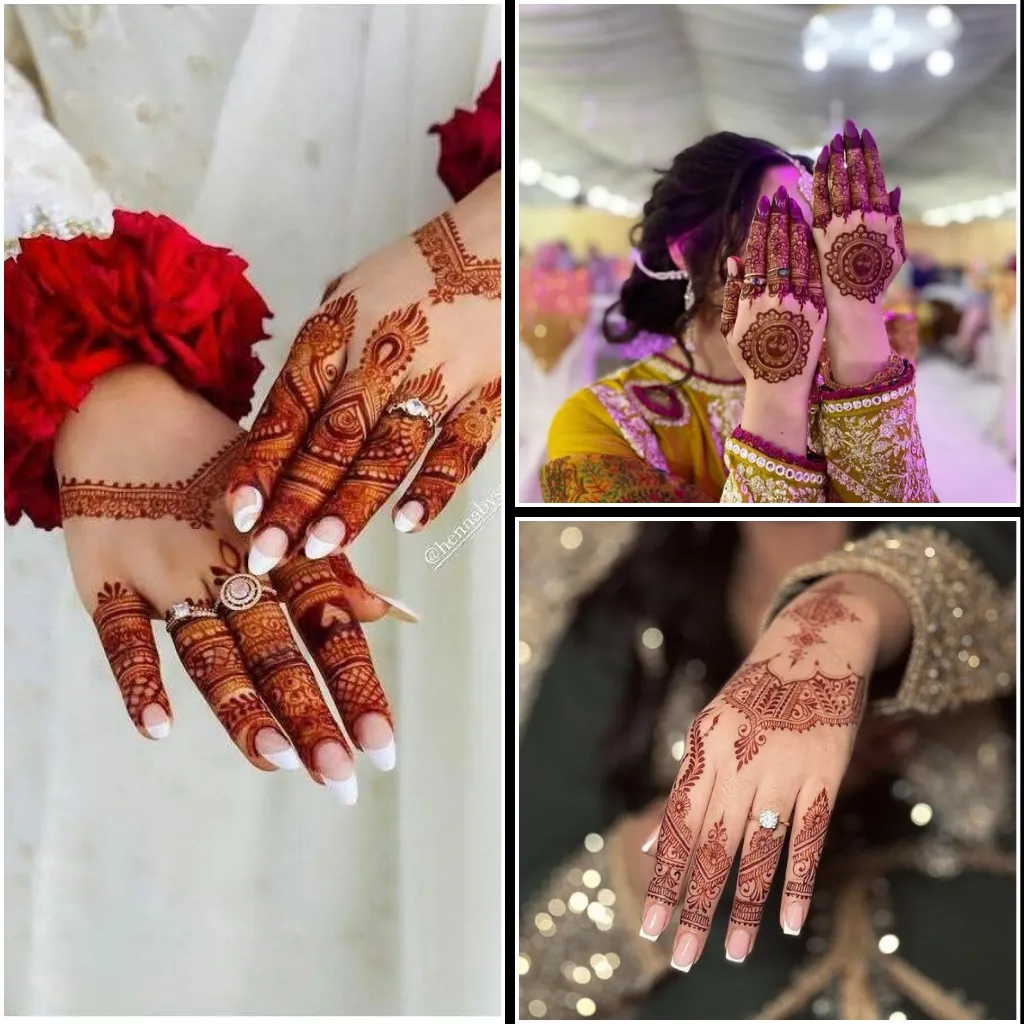
Wedding guests may prefer Cascading Roses, Hathphool, Mandala, Floating Vine, or a Khafif Arabic trail.
These styles feel formal but do not require the time or density of full bridal mehndi.
Everyday or Minimal Henna
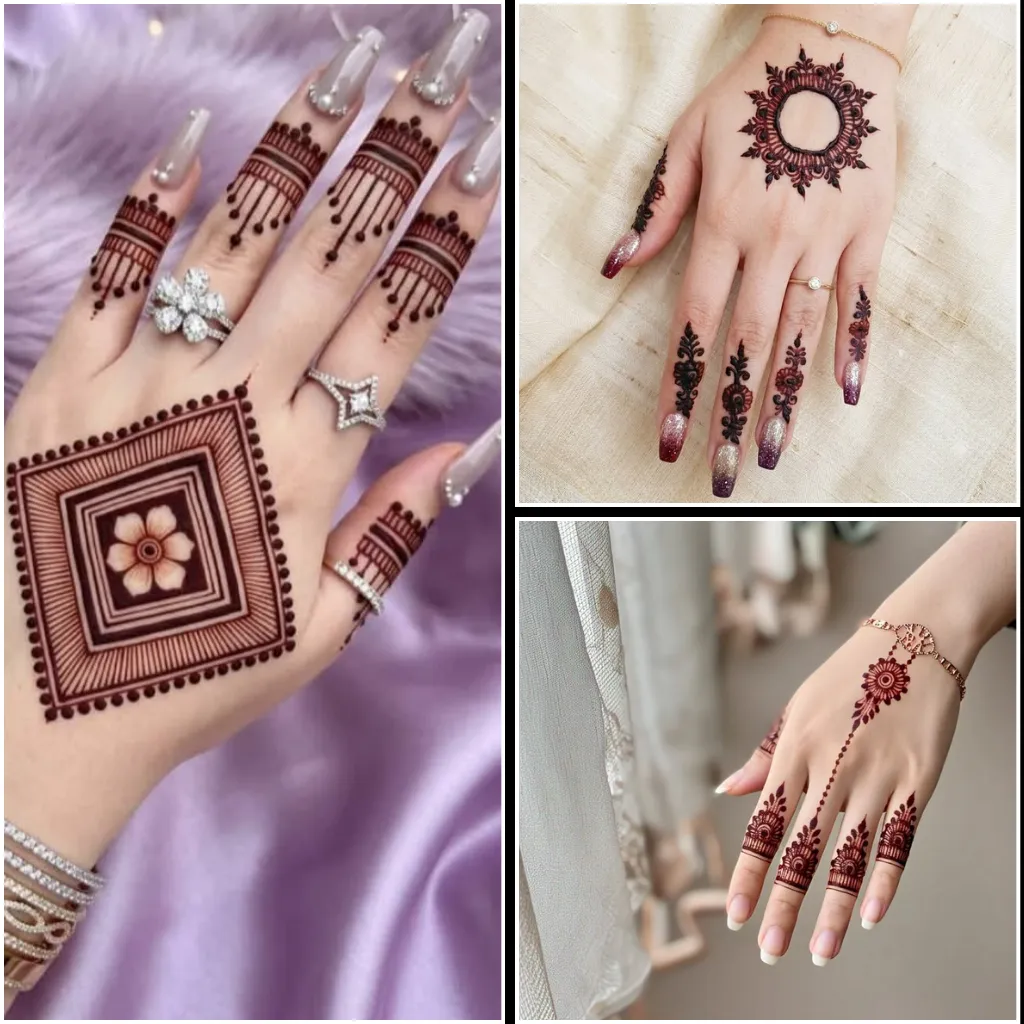
For dinners, weekends, holidays, or personal self-care, choose:
- Leafy Veins;
- a mini mandala;
- a wrist bracelet;
- Negative-Space Rose;
- Side-Palm Sweep;
- a Thumb-Heavy Trail.
Henna Placement: Hands, Feet, Fingers or Arms?
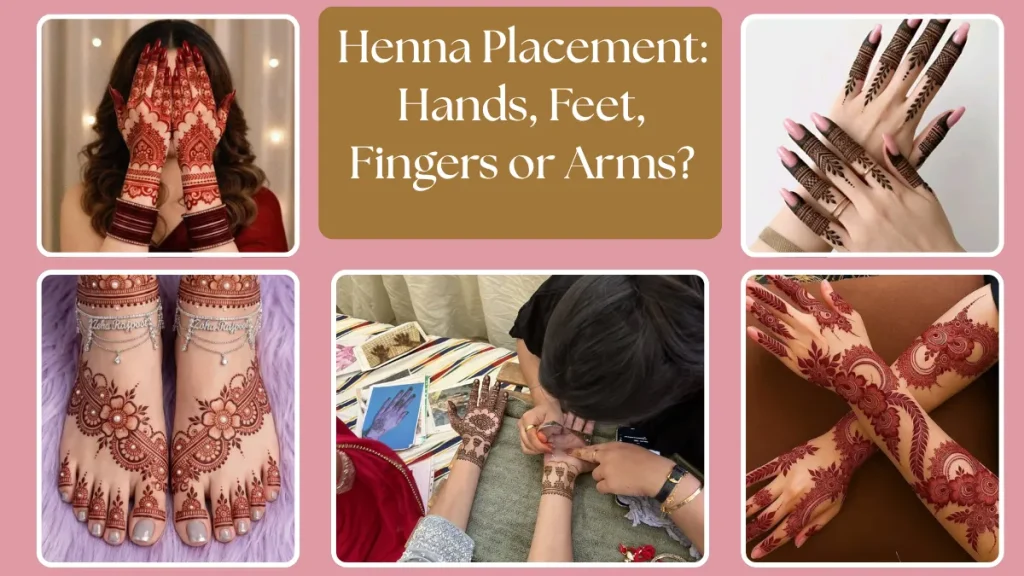
Front Palm
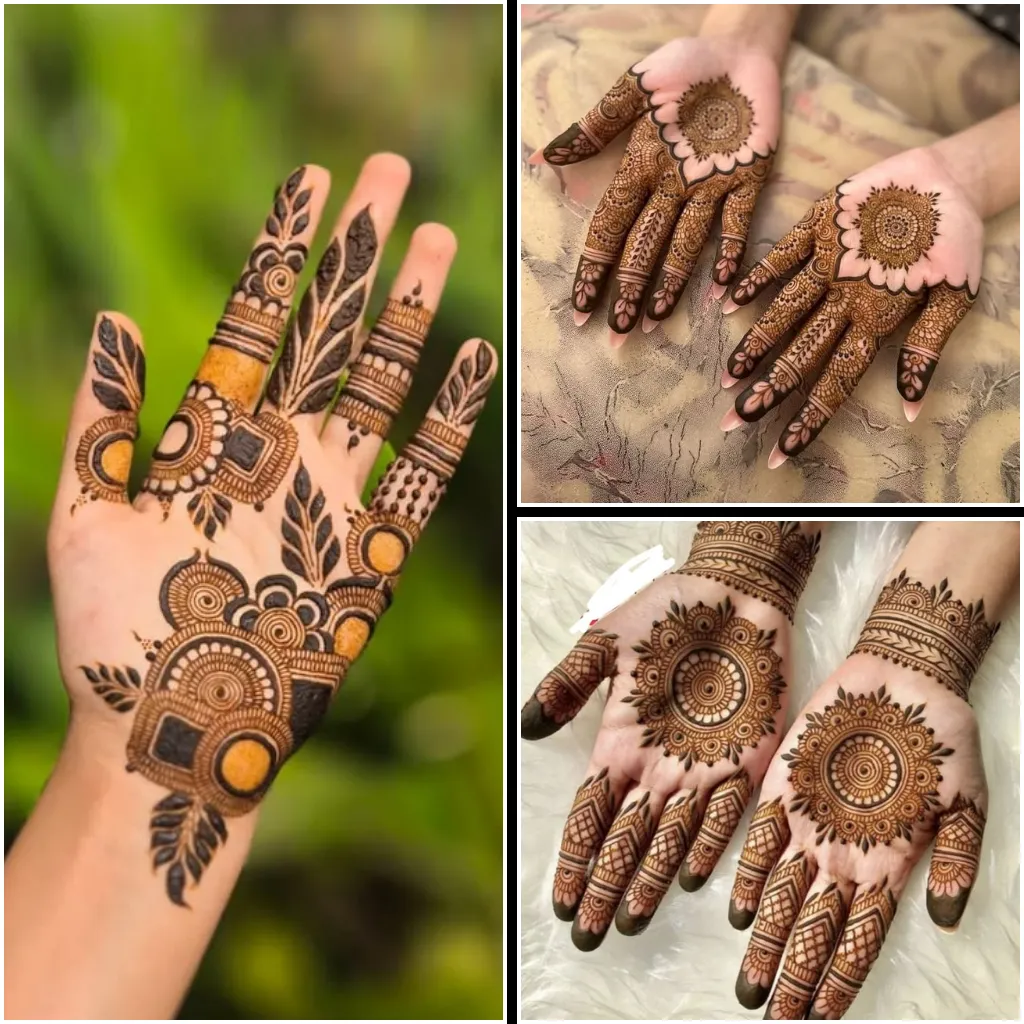
The front palm supports traditional mandalas, Indian mehndi, paisleys, calligraphy, and detailed bridal art. The stain may also develop more strongly here than on some other areas.
Back Hand
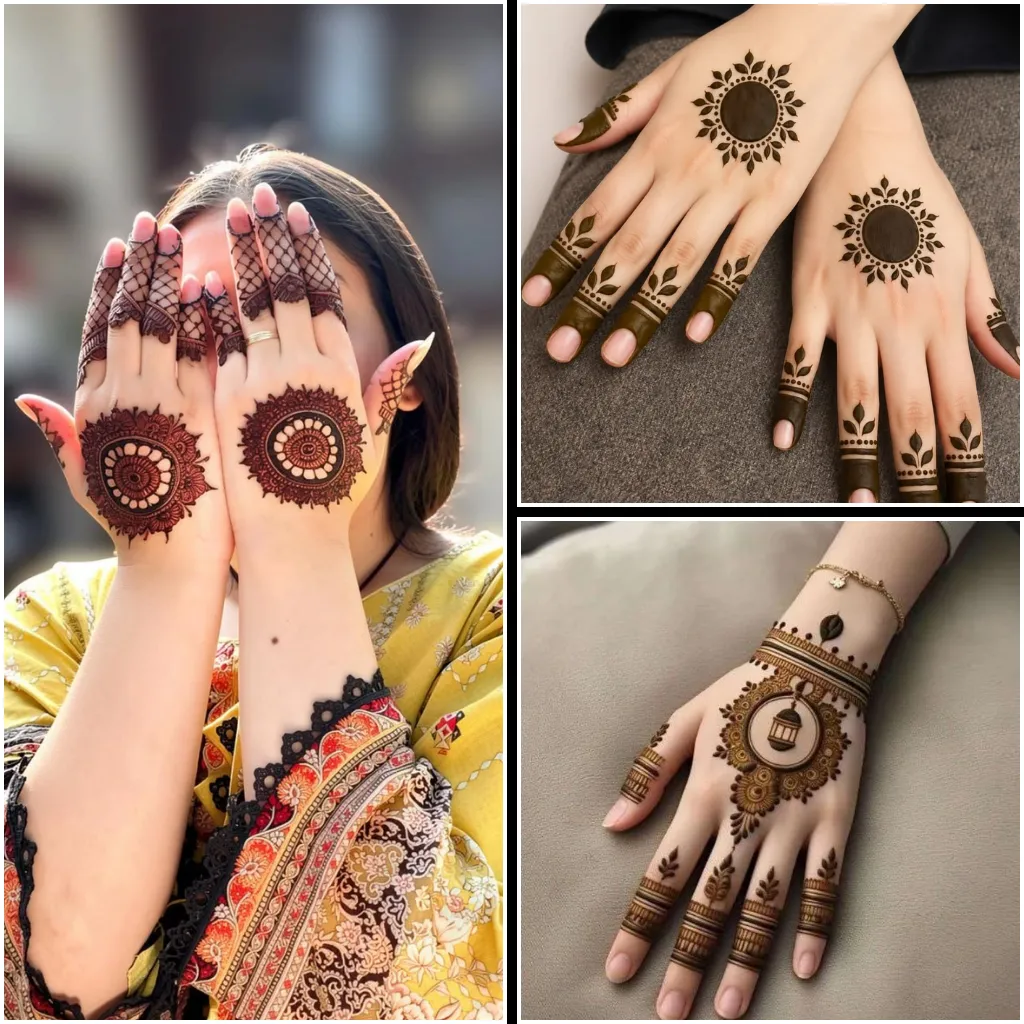
The back hand is highly visible in photographs and works beautifully for Arabic flowers, jewelry designs, negative-space patterns, and botanical trails.
Fingers
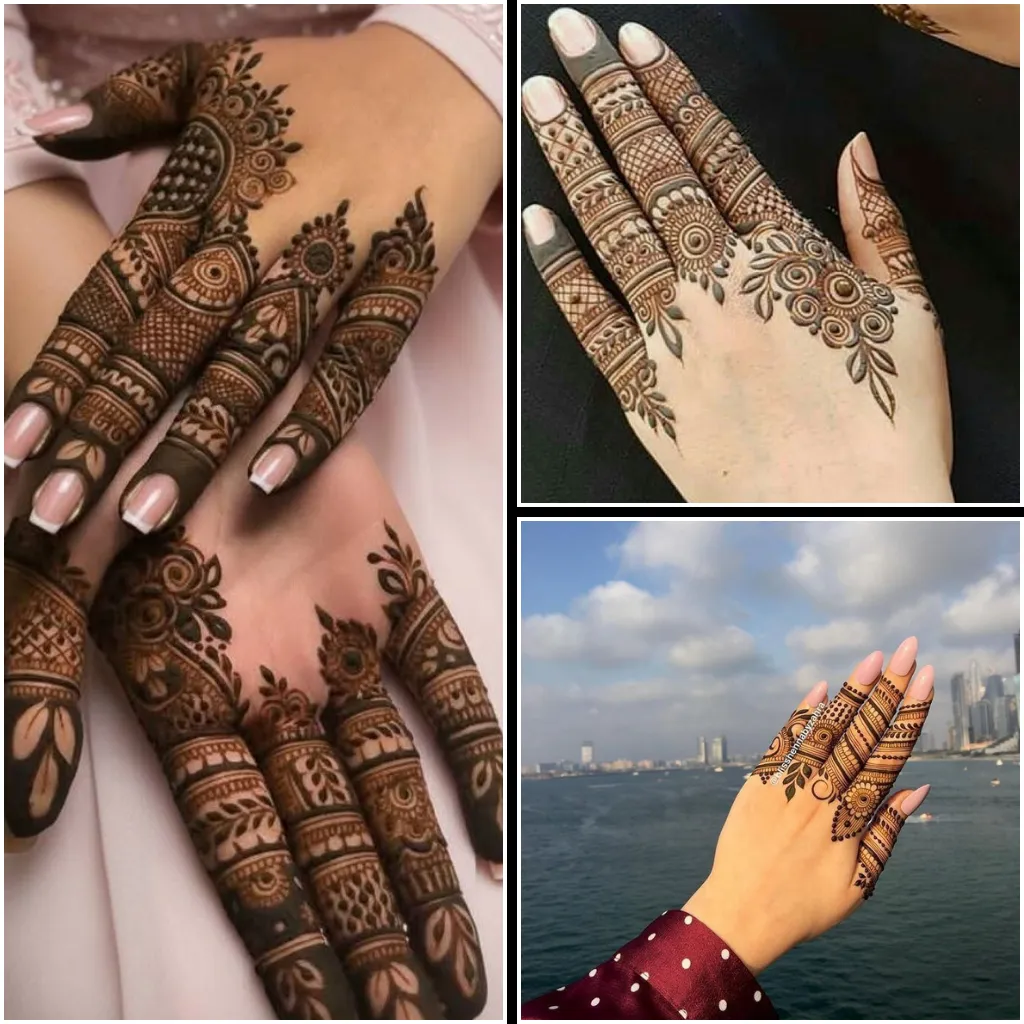
Finger-only henna can include geometric sections, dipped tips, rings, leaves, dots, or fine ornamental lines.
Wrist and Forearm
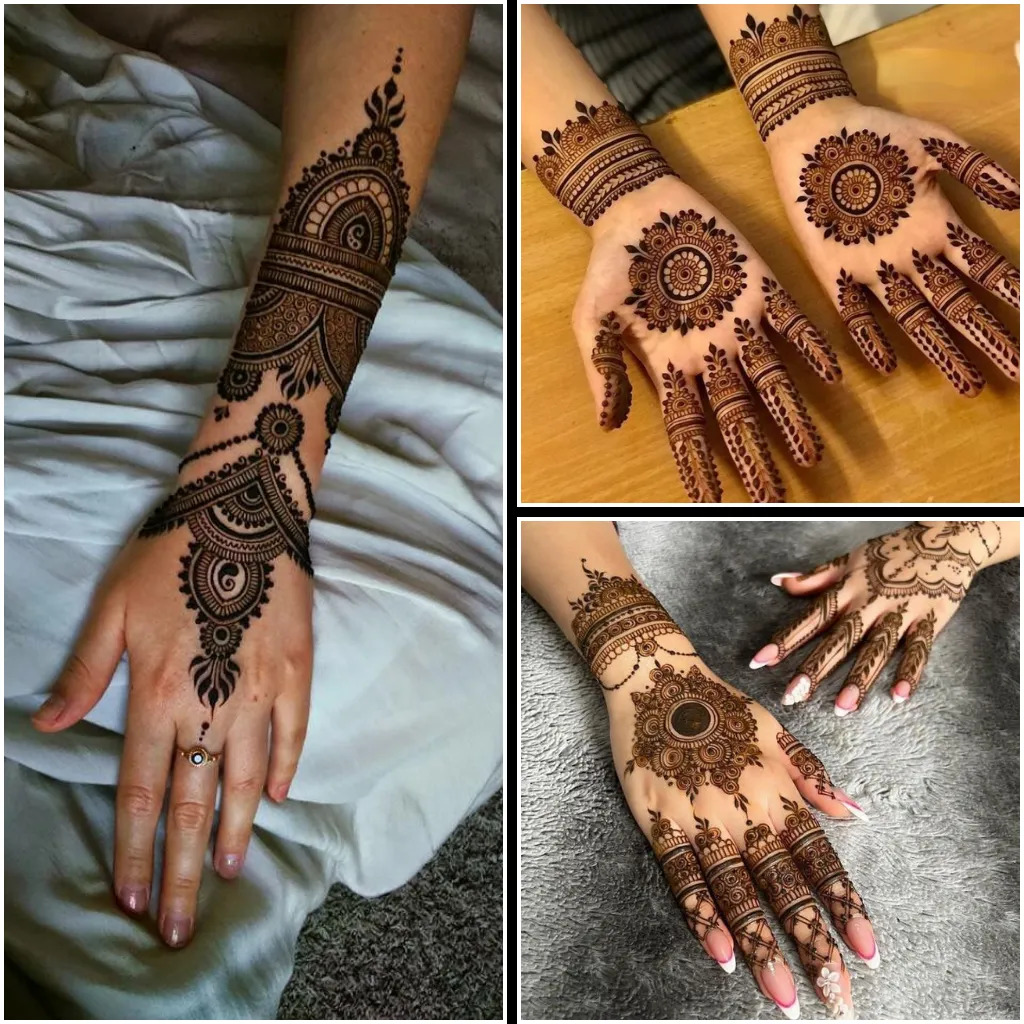
These areas suit bracelets, cuffs, S-curves, flowers, and extended bridal patterns. They can also connect hand designs to longer sleeve lines.
Feet and Ankles
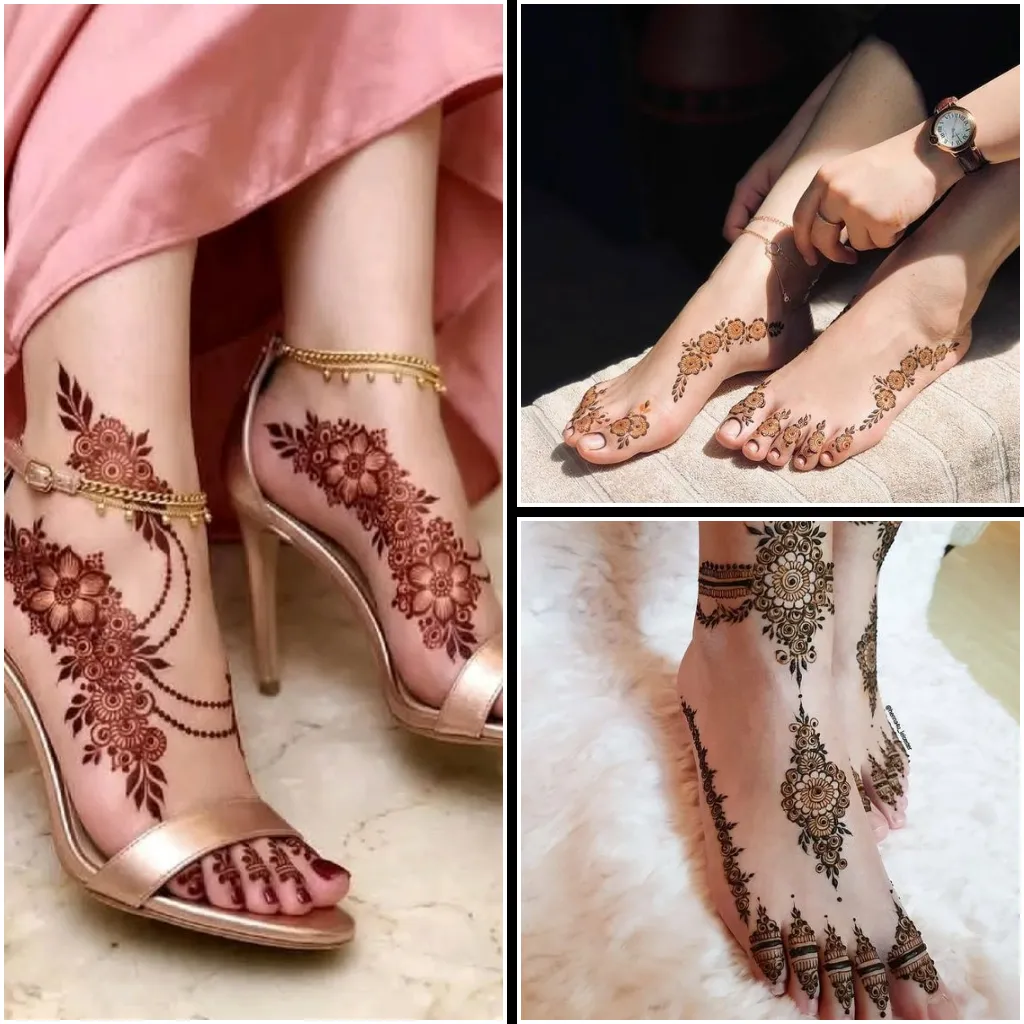
Floral trails, mandalas, anklet designs, lotus chains, and matching bridal patterns can be adapted for feet.
Up to the Elbow
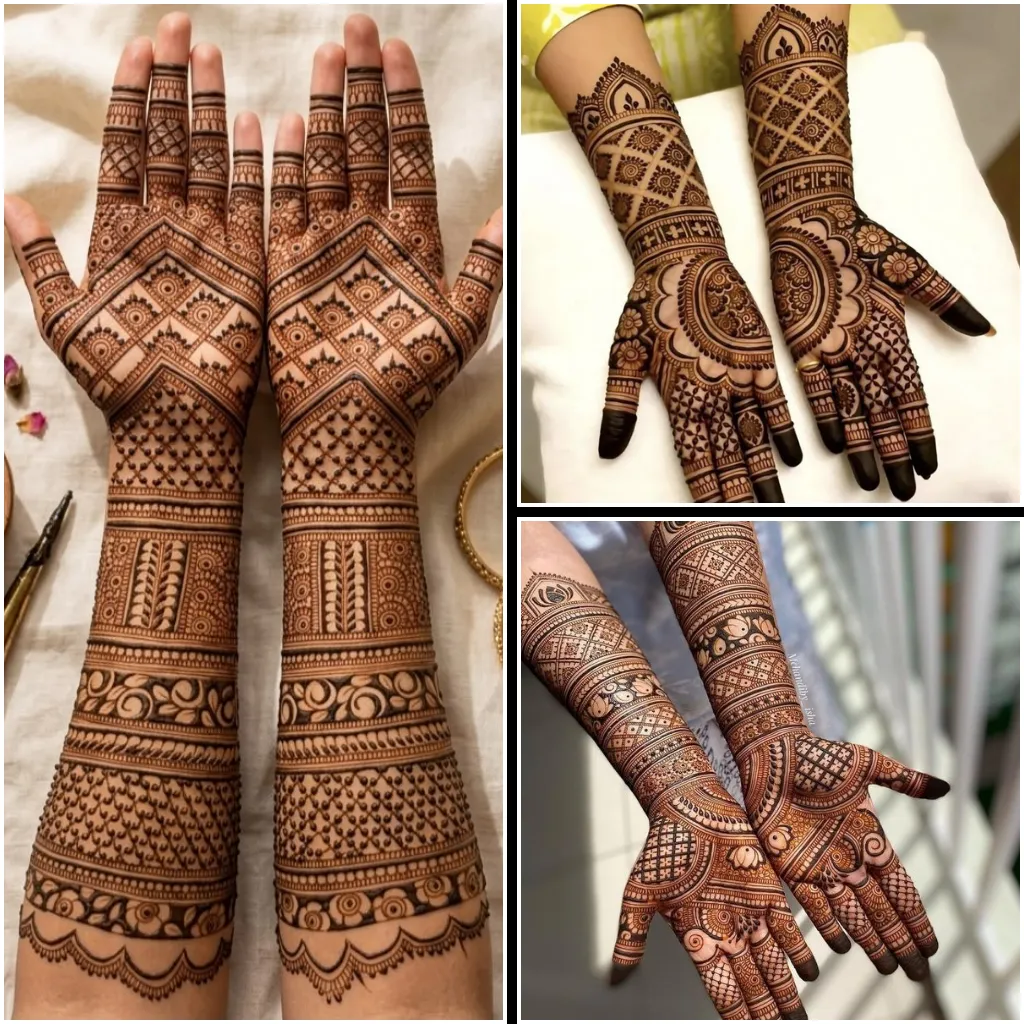
Longer coverage creates the greatest visual impact but requires more time. It is most appropriate for brides and important formal celebrations.
Henna Salon or Henna at Home?
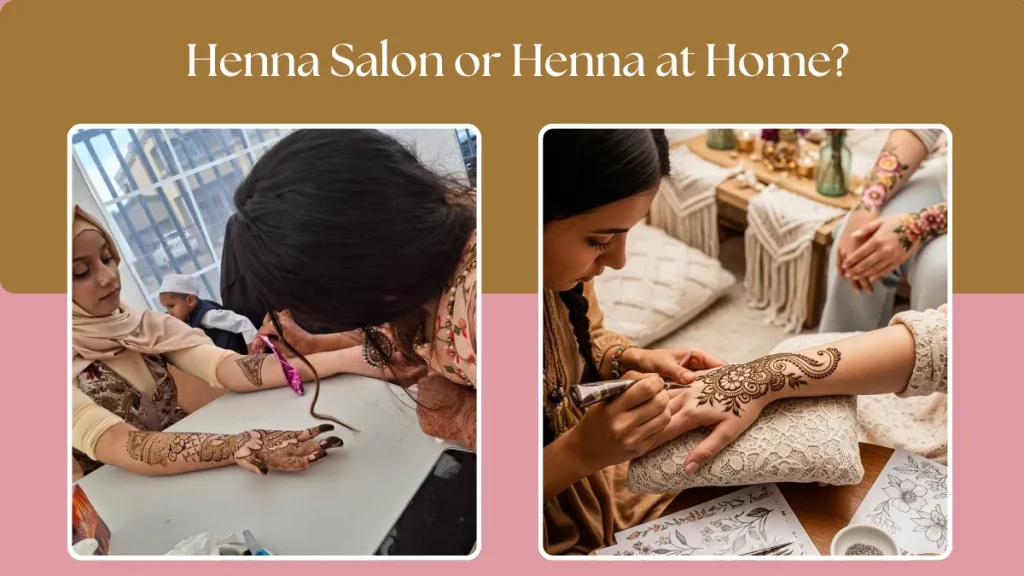
Both settings can provide a beautiful experience when the artist, ingredients, and hygiene standards are professional.
Choose a Henna Salon When
You want:
- a dedicated beauty environment;
- easier access to design references;
- a personal consultation;
- salon preparation before another beauty service;
- fewer distractions while the henna is applied.
A ladies salon can also help coordinate your henna with nails, hair, makeup, or other event preparation.
Choose Henna Home Service When
You want:
- privacy;
- comfort;
- a bridal-group appointment;
- henna for several family members;
- children to remain in a familiar environment;
- less travel before an event;
- a relaxed henna-night atmosphere.
What Makes a Skilled Henna Artist?
A professional henna artist should be able to do more than copy a picture. She should understand how to adapt the design to the client’s hand, occasion, and available time.
Look for:
Clean Line Control
Flowers, curves, dots, and fine details should remain clear rather than merging together.
Balanced Spacing
Negative space is an important part of henna art. It allows large flowers and detailed sections to remain visible.
Symmetry
Mandala, bracelet, split-hand, and bridal designs require careful balance.
Design Flow
A trail should follow the natural shape of the hand rather than feeling randomly placed.
Customization
The artist should be able to simplify, extend, combine, or personalize a design according to the client’s outfit and preference.
Hygiene and Ingredient Transparency
Clients should be able to ask what type of henna is being used and how the tools and application area are prepared.
Experience With Brides and Children
Bridal art requires patience and planning, while children’s henna requires speed, simplicity, and a gentle approach.
How to Prepare for Your Henna Appointment
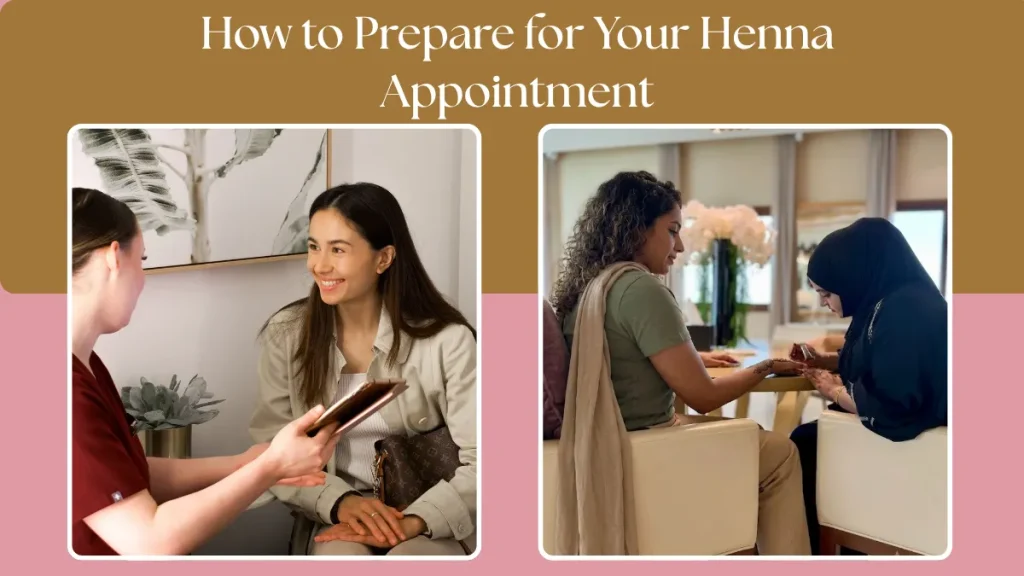
Arrive with clean, dry skin. Avoid applying heavy lotion, body oil, or cream to the area immediately before the appointment because it may affect how the paste sits on the skin.
Before your session:
- choose your approximate coverage;
- save two or three design references;
- tell the artist about your event and outfit;
- mention whether you prefer minimal or detailed work;
- wear clothing that leaves the application area accessible;
- complete waxing, manicures, or exfoliation beforehand;
- plan enough drying time;
- disclose known skin sensitivities.
Brides should confirm the hands, feet, length, and personalized elements before application begins.
Henna Aftercare for a Richer, Longer-Lasting Result
After application, allow the paste to dry naturally and follow the artist’s instructions about how long to keep it on.
Try to avoid smudging the fresh design. Once the paste is removed, reduce immediate exposure to water, strong soap, and unnecessary rubbing.
Helpful aftercare includes:
- keeping the design dry during the early development period;
- avoiding scrubbing or exfoliation;
- wearing gloves for cleaning where practical;
- limiting prolonged exposure to pools;
- patting the skin instead of rubbing it;
- avoiding strong skincare products directly over the stain.
The final depth and duration vary between individuals. Skin type, body area, aftercare, water exposure, and daily routine all influence how the colour develops and fades.
Common Henna Mistakes to Avoid
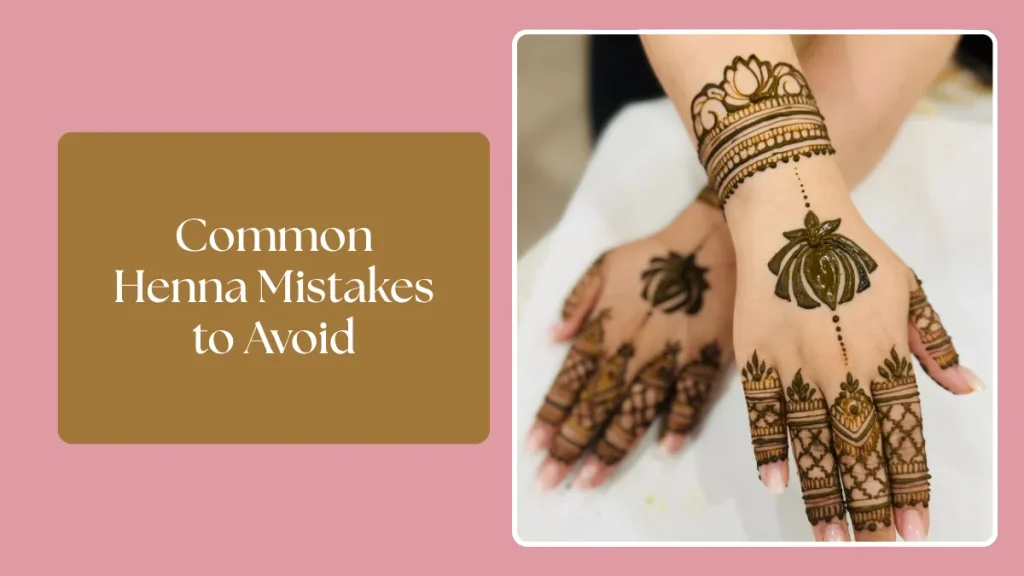
Choosing Detail Without Allowing Enough Time
A dense bridal reference cannot be completed with the same speed as a small Arabic trail.
Copying a Design Without Adapting It
A pattern designed for a long hand or forearm may need to be resized or restructured for another client.
Applying Lotion Before the Appointment
Heavy products can create a barrier between the paste and skin.
Using Unclear Products for Children
Children’s henna should be simple, supervised, and applied with ingredients that have been clearly identified.
Washing the Design Too Early
Early water exposure can affect stain development.
Making Every Area Equally Dense
Good henna needs visual breathing room. Even elaborate bridal mehndi benefits from contrast and planned open sections.
Henna Art at Aphrodite Beauty & Spa Abu Dhabi
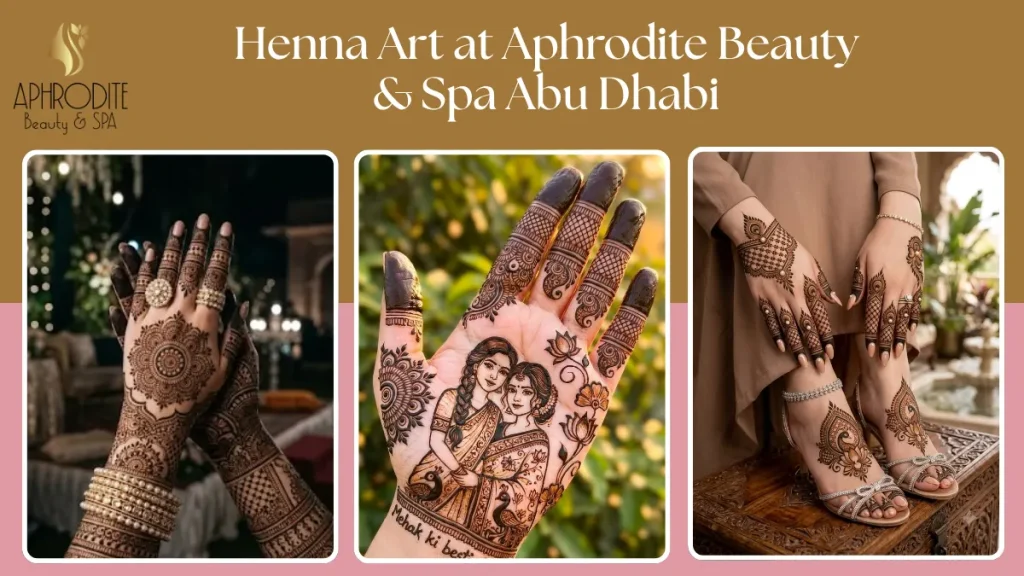
Aphrodite Beauty & Spa offers professional henna art for weddings, Eid, festivals, events, and personal beauty appointments. Designs can be customized from delicate floral pieces to fuller traditional hands, feet, and bridal compositions.
The service is built around:
- skilled henna artists;
- traditional Arabic and modern styles;
- bridal and event customization;
- natural henna;
- full-hand, foot, and smaller designs;
- careful application;
- hygiene;
- design selection based on the client’s occasion and preferences.
Whether you prefer Khafif Arabic lines, a bold Khaleeji trail, detailed Marwari mehndi, a jewelry-style back hand, or a playful design for your child, the artist can adapt the pattern to the coverage and finish you want.
Ready to Choose Your Henna Art?
Beautiful henna begins with a design that feels personal. Think about your occasion, outfit, preferred coverage, and whether you want the pattern to feel light, traditional, bridal, geometric, floral, or modern.
At Aphrodite Beauty & Spa, your henna can be customized rather than selected as a one-size-fits-all pattern. From simple henna designs and children’s motifs to Gulf Royal Bridal and detailed Indo-Arabic art, the right artist can turn your inspiration into a design that belongs naturally on your hands or feet.
So, email us: Aphrodite.beautyad@gmail.com.
Message us on Facebook:
https://www.facebook.com/people/Aphrodite-Beauty-SPA/61562796173809
Follow us on Instagram:
https://www.instagram.com/aphrodite_beautyad
Phone/WhatsApp: +971501422116
Hours: Monday to Sunday, 11 AM to 10 PM
Location: Das Tower – Sultan Bin Zayed Street – 9th floor – 903 32nd Street – Al Bateen – Abu Dhabi – United Arab Emirates
Note: Read Our Latest Blogs Also.
- True Moroccan Bath Benefits: A Premium Guide to Radiant Skin and Deep Relaxation in Abu Dhabi
- Best Hair Treatment for Frizzy Hair Abu Dhabi: A Complete Guide to Smoother, Softer Hair
- Manicure and Pedicure Before Wedding: Your Complete Abu Dhabi Bridal Nail Guide
- Makeup Trends Abu Dhabi 2026: Luxury Looks, Hair Styles, and Beauty Ideas for Abu Dhabi Women
- The Future of Luxury Personal Care: Top Trends in Beauty Salons in Abu Dhabi
- Eyelash Extensions Abu Dhabi – Luxury Volume & Lash Sets
What is henna art?
Henna art is temporary skin decoration created by applying henna paste in floral, geometric, traditional, or personalized patterns. Once the dried paste is removed, it leaves a stain that gradually develops and later fades.
Which Arabic henna design is best for a simple look?
Khafif Arabic henna, a small S-Curve, Leafy Veins, Side-Palm Sweep, or a simple floral trail are strong choices for a minimal look with open space.
Is natural henna suitable for children?
Natural henna may be used for children with parental approval and professional care. Keep the design small, avoid broken or irritated skin, confirm the ingredients, and consider a patch test for sensitive skin.
What is the difference between Arabic and Indian henna?
Arabic henna generally uses larger flowers, flowing trails, and more negative space. Indian henna is usually denser and includes finer paisleys, peacocks, jaali, and detailed full-hand patterns.
Is black henna the same as natural henna?
No. Products marketed as black henna should not automatically be treated as natural henna. Ask for transparent ingredient information and avoid unclear instant-black products, particularly for children or sensitive skin.
How long does professional henna last?
A professional natural henna design may remain visible for around 7 to 14 days. The exact duration depends on the body area, skin type, water exposure, and aftercare.
Which henna design is best for a bride?
Gulf Royal Bridal, Traditional Indian Marwari, Indo-Arabic Fusion, elbow-glove coverage, peacock motifs, jaali, and personalized calligraphy can all work for brides. The best choice depends on the wedding style, outfit, jewelry, and preferred coverage.
Can I book a henna artist at home in Abu Dhabi?
Yes, home henna can be useful for bridal groups, family appointments, children, and women who prefer privacy or convenience. Confirm the number of clients, coverage, design type, and appointment duration when booking.
[…] Henna Art in Abu Dhabi: 25 Beautiful Styles and How to Choose Yours […]
[…] Henna Art in Abu Dhabi: 25 Beautiful Styles and How to Choose Yours […]
[…] Henna Art in Abu Dhabi: 25 Beautiful Styles and How to Choose Yours […]
[…] Henna Art in Abu Dhabi: 25 Beautiful Styles and How to Choose Yours […]